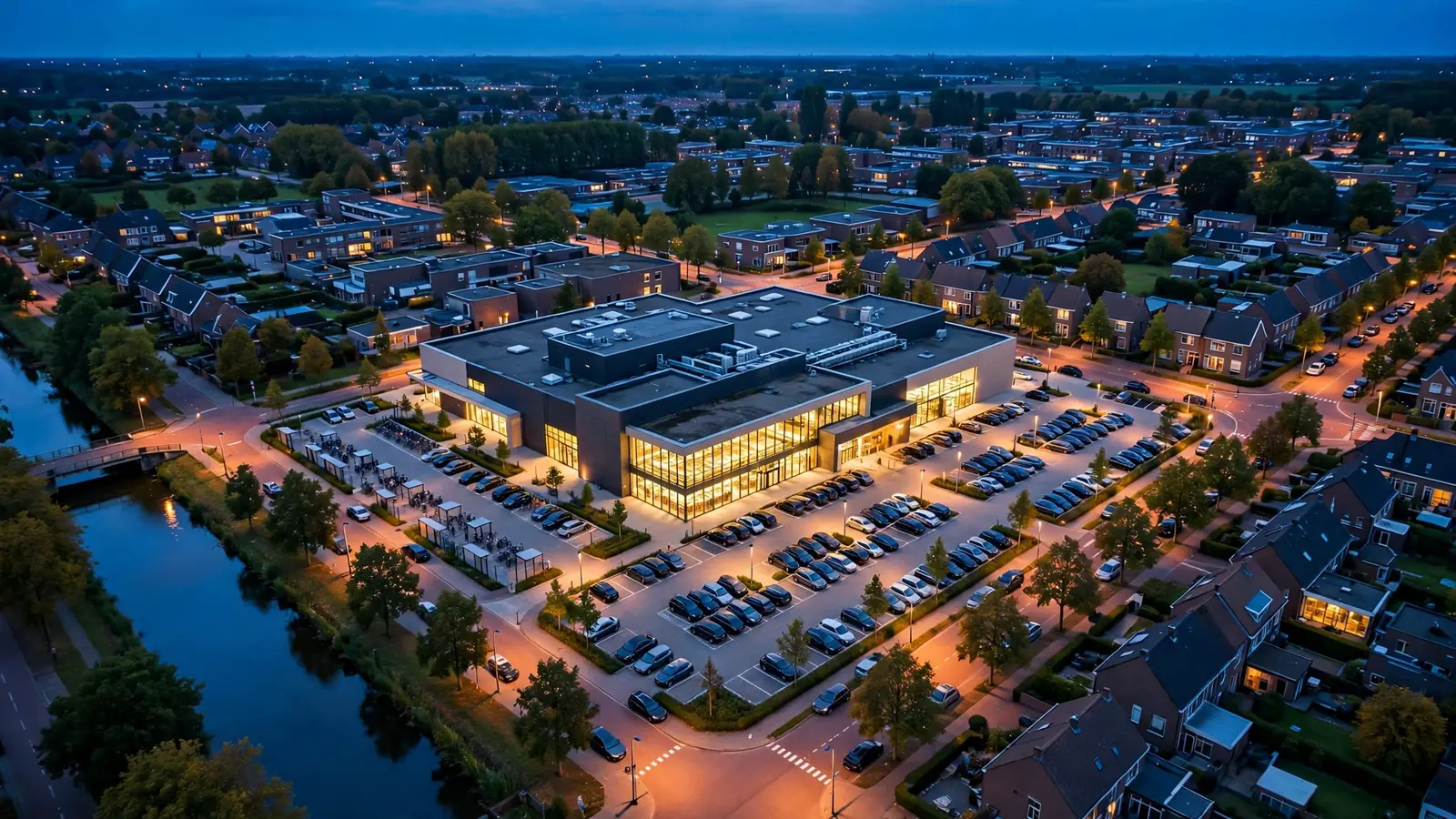
Netherlands Phase Black: Emergency Supermarkets, Cyberattacks and Global Preparedness
On Saturday 15 November 2026, the Dutch newspaper AD reported that the Netherlands' supermarkets are preparing for fase zwart — phase black — an extreme scenario in which normal food supply fails for a long time because of war, a large-scale cyberattack or a nationwide power outage. The plan is for a network of noodwinkels, emergency supermarkets with backup generators and a limited range of essential food, so that every resident is within a 15-minute drive of one. It is the biggest food-security story in the Netherlands in years, and it sits inside a much larger one: in the past two months, governments across Europe and beyond have told their citizens to keep emergency supplies, supermarkets in more than a dozen countries have had their freezers hacked, and the United States is testing its national alert system today. This site covers all of it, with every fact sourced and every unconfirmed claim labelled developing.
In short
Phase Black is the Dutch supermarket sector's name for the most extreme disruption scenario: normal food supply failing for a prolonged period because of war, a major cyberattack or a nationwide blackout. The plan, reported by AD on 15 November 2026 and by Het Financieele Dagblad on 31 October 2026, is to designate some of the Netherlands' roughly 4,500 supermarkets as noodwinkels — emergency shops with backup generators, a limited range of essential food, and the ability to supply each other without their usual computer systems. What is not decided: which stores, which products, who pays, and when they will be ready. A final decision is expected before summer 2027. The plan was accelerated by two triggers: the Ahold Delhaize cyber incident of 11 October 2026, which emptied Albert Heijn shelves within days, and the supermarket freezer attacks of October and November 2026, which hit stores in at least 10 European countries. No government source says war or a specific attack is imminent. The Dutch government's own line is that the country is not at war, but it is not at peace either, and there is no emergency now. This is an independent news site, not a government site.
The breaking story: Phase Black and the emergency supermarkets
The story broke in two stages. On 31 October 2026, Het Financieele Dagblad reported that Dutch supermarket chains wanted at least one supermarket per region to stay open during a long power cut, naming Albert Heijn, Jumbo and Aldi. On 15 November 2026, AD reported the fuller plan: a portion of the Netherlands' roughly 4,500 supermarkets would be designated as noodwinkels, emergency shops, with the target that every resident is within a 15-minute drive of one, or 30 minutes by bicycle, with more locations in densely populated areas and fewer in rural ones. The designated stores must get backup generators, because most Dutch supermarkets currently have none, and without power the tills, lighting, automatic doors, card payments and refrigeration all fail. The assortment in a noodwinkel would be limited to essential foodstuffs only, and the chains must be able to supply each other analogously — without their usual, mutually incompatible computer systems. No new stores would be built: existing stores would be converted to emergency mode. What is not decided is almost as important as what is: which products must be stocked, how storage works, and who pays. The supermarket trade association CBL is discussing those questions with the Ministry of Agriculture. CBL director Marc Jansen said the preparation had accelerated because of recent incidents — the Albert Heijn cyber incident and the attacks on digital refrigeration systems at foreign supermarket chains — and that a final decision is expected before summer 2027. There is no official CBL press release and no government announcement of the noodwinkel plan: it exists in interview and reporting form only. The government's parallel track is its own National Crisis Plan for Food Security, due in the first quarter of 2027.
Why now: the two triggers
Two events in October 2026 pushed the plan forward. The first was the Ahold Delhaize cyber incident. On Sunday 11 October 2026, the company detected suspicious activity in its IT systems and switched them off. Distribution centres stopped, online orders could not be delivered, and fresh produce shelves emptied within days. The company confirmed on 19 October 2026 that the incident resulted from the malicious actions of others, and estimated on 4–5 November that it would cost 200 to 250 million euros in lower net sales in the fourth quarter of 2026. Erasmus University researcher René de Koster explained on 29 October 2026 that regional distribution centres hold only about a day and a half of stock, and that ordering, distribution and supplier ordering all depend on the same IT systems, so when they went down none of that could happen. The second trigger was the supermarket freezer attacks. In the night of 11–12 October 2026, attackers took control of Danfoss refrigeration controllers in French supermarkets and forced them into defrost mode; in the night of 1–2 November 2026, a second wave drove freezer temperatures up to about 50 degrees Celsius in stores across at least 10 European countries, including the Netherlands. Dutch authorities see no connection between the Ahold Delhaize incident and the freezer attacks, and the two should not be presented as one event. Together, though, they showed the supermarket sector two different ways its food supply could be stopped — one by switching the computers off, one by switching the fridges into defrost — and the noodwinkel plan is the sector's answer to both.
The global picture: cyberattacks in 2025 and 2026
The Netherlands is not the only country whose critical systems have been attacked. In the night of 29–30 December 2025, a wiper attack hit Poland's power grid — and attribution conflicts: CERT Polska blames an FSB-linked group called Berserk Bear, while ESET and Dragos attribute it to Sandworm, linked to Russia's GRU, with medium confidence. Both attributions are reported on our Poland page; neither is presented as settled. In July 2026, a cyberattack shut a UK power generator down for four days. In April 2025, a dam in Bremanger, Norway, was hacked. In July 2026, water systems in Minnesota and 12 other US states were attacked. In the UK, the retail wave of 2025–2026 hit Marks & Spencer, the Co-op and Jaguar Land Rover. In Japan, ransomware at Asahi hit beer production across 30 factories. In France, a blood bank's freezers were targeted on 1–2 November 2026, in the same wave as the supermarket freezers. In the Baltic Sea, undersea cables have been sabotaged, and a conviction in the Fitburg case and the Eagle S tanker seizure are covered on our Baltic page. Not every disaster in this period was a cyberattack, and this site is careful about the distinction: the FAA ground stop of 13 November 2026 was caused by router work, not an attack, and the Iberian blackout of 28 April 2025 has no indication of a cyberattack behind it. Our global cyberattacks hub lists every verified incident by country, with an attribution line on each page: official, reported, claimed or none.
Governments are telling citizens to prepare — but not to panic
The second big story of autumn 2026 is preparedness guidance. The European Commission's Preparedness Union Strategy, adopted on 26 March 2025, committed to guidelines for a minimum of 72 hours of population self-sufficiency, and the Commission's Guidelines on Population Preparedness, dated 30 October 2026 and presented on 3 November 2026, set at least 72 hours as a minimum baseline. The guidelines are non-binding, prescribe no quantities and no single kit, and are addressed to member states. NATO published its updated Resilience Baseline Requirements on 15 September 2026 — seven requirements covering government continuity, energy, movement of people, food and water, mass casualties, communications and transport — but the NATO text never mentions household kits or 72 hours: it is state-level, not a household instruction. National campaigns followed their own timetables: the UK launched Be Ready on 22 October 2026, asking households to keep three days of water and food; Belgium published a practical guide on 1 October 2026; Luxembourg launched its 72-hour guide on 9 October 2026; Japan opened a new Disaster Management Agency on 2 November 2026 and asked households to prepare for at least three days, ideally a week. A Newsweek map of 28 October 2026 counted 33 countries with standing advice to stockpile — a magazine compilation of guidance from different years, not a coordinated announcement. A personal count by the writer SmithSense on 14 November 2026 put the number at 47, using a broader rule. Both counts are explained, with their sources and dates, on our preparedness hub. No government in this story says a specific attack, blackout or disaster is imminent on a specific date.
What is happening today: Tuesday 17 November 2026
Today, Tuesday 17 November 2026, the United States is conducting a nationwide test of its Emergency Alert System at 2:20 p.m. ET, on radio and television only — not on mobile phones. The test is required by law at least once every three years; the last one was on 4 October 2023. Viral claims of a 90-day global blackout starting today have no evidence behind them: PolitiFact rated them false on 16 November 2026. The Pentagon's FORTRESS programme, announced on 30 September 2026, aims to make major US military installations generate their own power independently of the civilian grid; a figure of 90 days of independent operation was reported by Fox News Digital on 25 October 2026 from internal documents, but the Department of Defense has not publicly confirmed it, and this site always presents it as reported, not confirmed. In the UK, the BBC reported on 7 November 2026 on Black Sky, the BBC's emergency-broadcasting contingency for a total national grid failure — a reconstruction from internal briefings, not an official document, and the Cabinet Office says there has never been a complete outage in the grid's 75-year history and there is no specific threat. In the Netherlands, the Phase Black story is three days old, the decision on noodwinkels is not expected before summer 2027, and the government's food-security crisis plan is due in the first quarter of 2027. Our live-updates page carries each new development as it is confirmed, with the time it was checked.
How to use this site
This site is organised in five hubs. The Netherlands hub covers Phase Black, the noodwinkels, the Albert Heijn timeline, the freezer hacks, the government's food-security plan, the 72-hour versus eight-day argument, the Denk vooruit emergency kit, Denmark's 51 emergency supermarkets, Rotterdam port, and how you will be warned. The global cyberattacks hub lists verified attacks by country, with attribution on every page. The preparedness hub covers every country's official guidance, the EU strategy, NATO's requirements, the UK Be Ready campaign and Black Sky, the US FORTRESS programme and the EAS test, and the Nordic model. The food-supply hub explains how supply chains break, how Albert Heijn's shelves emptied, what the Iberian blackout did to food, how much food and water to store, and what to do in the first hour of a blackout. The core pages are this homepage, live updates, the FAQ, and the fact-checks on whether a cyberattack is coming and how a cyberattack differs from a blackout. Every page carries its sources. Anything we could not verify is marked developing, with the time it was checked, and never presented as fact. This is an independent news site, not a government site, and it is not affiliated with any government, supermarket chain or security company.
Frequently asked questions
Phase Black — fase zwart in Dutch — is the supermarket sector's name for the most extreme disruption scenario: normal food supply failing for a prolonged period because of war, a major cyberattack or a nationwide power outage. It is a sector term used by the supermarket trade association CBL, not a term found in any published Dutch government emergency plan.
No government or CBL source says war is imminent. The noodwinkel plan is precautionary and scenario-based, covering war, cyberattack and blackout as three possible triggers. The government's own line is that the Netherlands is not at war, but it is not at peace either, and there is no emergency now.
A noodwinkel is an emergency supermarket: an existing store designated to stay open in an extreme crisis, with a backup generator, a limited range of essential food, and the ability to be supplied without the usual computer systems. The target is for every resident to be within a 15-minute drive, or 30 minutes by bicycle, of one.
A Newsweek map of 28 October 2026 counted 33 countries with standing advice to keep emergency food and water — a compilation of guidance from different years, not a coordinated announcement. A personal count by SmithSense on 14 November 2026 put it at 47 using a broader rule. The full list, with durations and sources, is on our preparedness hub.
At least 72 hours, or three days, is the floor almost everywhere: the EU guidelines set it as a minimum baseline, and the Netherlands, UK, France, Denmark, Finland, Canada and Japan all use it. Sweden, Norway and Estonia ask for a week; Germany recommends ideally 10 days; Austria advises 14 days.
The second wave of supermarket freezer attacks on 1–2 November 2026, which drove refrigeration temperatures up to about 50 degrees Celsius in stores across at least 10 European countries, and the ongoing fallout from the Ahold Delhaize cyber incident of 11 October 2026, which cost an estimated 200 to 250 million euros in lower fourth-quarter sales.
An independent news site covering the Netherlands Phase Black story, global cyberattacks and government preparedness guidance. It is not a government site, not affiliated with any supermarket chain or security company, and it sources every fact and labels anything unconfirmed as developing.
Start with the official 72-hour kit: three litres of water per person per day, long-life food, a torch, a battery radio, a first-aid kit, regular medication and some cash. The detailed numbers by country are on our page on how much food and water to store, and the printable list is on our emergency kit checklist page.
Figures are given with their snapshot time and source. Developing items are marked as developing. Last checked Tuesday 17 November 2026, about 12:50 PKT.
Netherlands — Phase Black
Netherlands Phase Black (Fase Zwart): What We Know
Dutch supermarkets are preparing for 'fase zwart' — emergency shops (noodwinkels) for war, a major cyberattack or a nationwide blackout. What is decided, what i
Fase Zwart Explained: What "Phase Black" Actually Means
What is fase zwart? The Dutch supermarket sector's term for the worst-case food-supply scenario — beyond code rood — explained: the three triggers, what it is n
Noodwinkels: How the Emergency Supermarkets Would Work
Noodwinkels are emergency supermarkets for a crisis: backup generators, essential food only, 15 minutes by car or 30 minutes by bike. How they would work, and w
Which Supermarkets Are Involved? Albert Heijn, Jumbo, Aldi — and the Lidl Question
Albert Heijn, Jumbo and Aldi are the chains named in the noodwinkel reporting. Lidl is named by only one source and is unconfirmed. No store list exists — and a
CBL and Marc Jansen: Who Is Behind the Plan
CBL, the Dutch supermarket trade association, and its director Marc Jansen are behind the noodwinkel plan. What CBL is, what Jansen said, the cost problem, and
Albert Heijn Cyberattack: Full Timeline, 11 October – 5 November 2026
Day-by-day timeline of the Ahold Delhaize cyber incident: suspicious activity on 11 October, distribution centres stopped, shelves emptied, deliveries suspended
Landelijk Crisisplan Voedselzekerheid: The Government's Food-Security Plan
The Landelijk Crisisplan Voedselzekerheid is the Dutch government's National Crisis Plan for Food Security, due in Q1 2027. What it is, who is behind it, the 2–
Denk Vooruit: The Dutch 72-Hour Emergency Kit (Noodpakket), Item by Item
Denk vooruit is the Dutch government's preparedness campaign. The official noodpakket: 3 litres of water per person per day, EUR 70 cash per adult, and the full
Denmark's 51 Emergency Supermarkets — The Model the Netherlands Is Copying
Salling Group is equipping 51 Danish shops as emergency stores: 17 Bilka, 32 Føtex, 2 Netto, each able to run 48 hours without power or internet. How Denmark's
Rotterdam: Why the Netherlands' Food Supply Runs Through One Port
Rotterdam is the EU's largest port: 13.4 million TEU in 2024, 11.8% of EU tonnage. Why the Netherlands' food supply depends on one port — and why the inflated s
Netherlands Prepares for War: What That Actually Means
No government or CBL source says war is imminent. What 'the Netherlands prepares for war' actually means: the scenarios, the NATO context, the sirens, the noodw
What Is NOT Decided Yet — And What Would Change the Story
Living page: what is still undecided on fase zwart — store numbers and locations, products, funding, announcements to watch — and what would change the story. L
Global cyberattacks by country
Global Cyberattacks by Country, 2025-2026: The Verified List
Every major verified cyberattack of 2025-2026, listed by country: France fridge hacks, Poland power grid, UK retail, Norway dam, US water and hospitals, Asahi a
France: The Supermarket Fridge Hack of October 2026
On the night of 11-12 October 2026 hackers forced supermarket fridges across France into defrost mode. Around 700 stores hit, food spoiled, fires started. Full
Europe: The Second Supermarket Fridge Wave, 1-2 November 2026
On the night of 1-2 November 2026 supermarket fridges were hacked again across Europe — Belgium, Sweden, Ireland, the Netherlands and more. No confirmed attribu
Poland: The Power Grid Wiper Attack of 29-30 December 2025
On 29-30 December 2025 attackers hit Poland's power sector with wiper malware. Over 30 wind and solar sites, two CHP plants, and a nine-month intrusion. Full ac
UK: A Power Plant Shut Down for Four Days, July 2026
In July 2026 a cyber incident shut a small UK power generator for four days. No one lost power and the grid was never at risk. Full verified account.
UK: The Retail Cyberattack Wave — M&S, Co-op & Jaguar Land Rover
In spring 2025 hackers hit Marks & Spencer, the Co-op and Jaguar Land Rover. Help-desk impersonation, DragonForce ransomware, 6.5 million members' data, five we
Norway: The Dam Hack — Bremanger, 7 April 2025
On 7 April 2025 hackers opened a floodgate at the Risevatnet dam in Bremanger, Norway, releasing 500 litres a second for four hours. Full account and Russian at
USA: Water Systems Under Attack — Minnesota & 12 States, July 2026
In July 2026 hackers attacked water systems in Minnesota and at least 12 US states, targeting internet-exposed PLCs. Braham's plant went offline. Full verified
USA: Hospitals & Healthcare Ransomware — Change Healthcare & DaVita
Change Healthcare's 2024 ransomware attack hit 190 million people; DaVita's 2025 attack hit 2.7 million dialysis patients. Why healthcare is the most-targeted s
Japan: Asahi Ransomware — Beer, Fax Machines & 30 Factories
From 29 September 2025 ransomware stopped Asahi's 30 factories in Japan. Orders went by phone, fax and handwriting. Qilin claimed it. Full account.
France: Blood Bank Freezers Targeted — EFS, 1-2 November 2026
On the night of 1-2 November 2026 plasma cold rooms at France's blood service were targeted. No blood was lost, no patient affected. Full verified account.
Baltic Sea: Undersea Cable Sabotage — Fitburg & Eagle S
Undersea cables in the Baltic Sea were cut by dragging anchors, not by hackers. The Fitburg conviction of 5 November 2026 and the Eagle S case, explained.
NOT a Cyberattack: The FAA Ground Stop & the Iberian Blackout
The FAA ground stop of 13 November 2026 was a router failure, and the Iberian blackout of 28 April 2025 was a voltage collapse. Neither was a cyberattack. The e
Food Supply Under Attack: How Ransomware Reaches Your Plate
From JBS in 2021 to Asahi in 2025 and Ahold Delhaize in 2026: how ransomware and cyberattacks reach your plate. Timeline, cold chain and distribution.
Timeline: Every Major Cyberattack, October-November 2026
Every major verified cyberattack of October and November 2026, week by week: Ahold Delhaize, the French and European fridge waves, the EFS blood bank, and the F
Who Is Behind the Attacks? Attribution Explained
Attribution explained: what official, reported, claimed and medium-confidence mean, and who is behind the 2025-2026 attacks — Sandworm, Shahid Kaveh, Scattered
Preparedness by country
Which Countries Are Telling Citizens to Stockpile? The Full List, Explained
Which countries are telling citizens to stockpile food and water? The verified list, the 33 vs 47 count explained, durations by country, and what governments ar
The 72-Hour Rule, Explained: Why 3 Days, What It Covers, Who Asks for More
The 72-hour rule explained: why governments ask for three days of supplies, what the rule covers, and which countries ask for a week, ten days or fourteen days
EU Preparedness Union Strategy + October 2026 Guidelines: What Brussels Actually Said
EU Preparedness Union Strategy and the October 2026 population preparedness guidelines explained: what Brussels actually said, what is non-binding, and what it
NATO's Resilience Baseline Requirements (15 Sept 2026): The Seven Requirements in Plain English
NATO's Resilience Baseline Requirements of 15 September 2026 explained in plain English: the seven requirements, what they cover, and why they are not a househo
UK Be Ready Campaign: The 3-Day Checklist, Item by Item
UK Be Ready campaign explained: launched 22 October 2026, the 3-day checklist item by item, what to buy, and why the government says to be alert but not alarmed
UK Black Sky: What the BBC Revealed About Emergency Broadcasting
UK Black Sky plan explained: what the BBC reported on 7 November 2026 about emergency broadcasting during a total grid failure, and what is not confirmed.
US Preparedness: Ready.gov, FORTRESS, and the 17 Nov EAS Test
US preparedness explained: Ready.gov Build a Kit, the Pentagon FORTRESS programme and the reported 90-day figure, and the FEMA EAS test on Tuesday 17 November 2
Preparedness by Country: Sweden, Norway, Finland, Denmark — The Nordic Model
Nordic preparedness explained: Sweden's week-long booklet, Norway's DSB one-week advice, Finland's 72 hours, and Denmark's 3-day leaflet — the Nordic model, cou
Preparedness by Country: Germany, France, Netherlands, Belgium, Luxembourg, Ireland
Preparedness in Germany, France, the Netherlands, Belgium, Luxembourg and Ireland: BBK 10 days, the French 72-hour kit, Denk vooruit, and the October 2026 Belgi
Preparedness Beyond Europe: Japan, Canada, US, and the Countries Still to Verify
Preparedness beyond Europe: Japan's new Disaster Management Agency, Canada's 72-hour Get Prepared programme, the US Ready.gov guidance, and the countries still
How to Prepare for a Cyberattack at Home
How to prepare for a cyberattack at home: what official emergency-kit guidance covers, what the Ahold Delhaize and fridge attacks showed about shelves and power
Emergency Kit Checklist: What to Pack for 72 Hours (Printable)
Emergency kit checklist for 72 hours: what to pack, how much water and food per person, and the official quantities from the Netherlands, UK, Germany, Sweden, U
Food supply
How Food Supply Chains Break: Power, Digital Systems and Transport
How do supermarkets run out of food? Three mechanisms — power, digital systems and transport — explained with the Albert Heijn cyberattack, the Iberian blackout
Albert Heijn: How Shelves Emptied in Days
How did Albert Heijn shelves empty after the Ahold Delhaize cyberattack of 11 October 2026? The food-supply mechanics: 1.5 days of stock, halted distribution ce
The Freezer Hacks: What They Meant for the Netherlands
Supermarket refrigeration systems were hacked in France in October 2026 and across 10 European countries, including the Netherlands, on 1–2 November. The Dutch
Spain–Portugal Blackout: A Day Without Power, and What It Did to Food
The Iberian blackout of 28 April 2025 cut power to 60 million people. What happened to food: supermarkets closed, card payments failed, shelves emptied and frid
How Much Food and Water to Store: The Official Numbers, Country by Country
How much water per person per day should you store? The official numbers from the Netherlands, UK, Germany, US, Canada, Sweden, Norway and more — plus worked ex
What to Do in the First Hour of a Blackout or Cyber Outage
The power is out. What do you do in the first hour? A practical checklist: fridge and freezer discipline, cash, battery radio, official alerts, and what not to
Explain & verify
Is a Cyberattack (or War, or a Blackout) Coming? A Fact-Check
Is a cyberattack coming? Is war coming? Is a blackout coming? A fact-check of what governments actually said — and what they did not say.
Cyberattack vs Blackout vs War: What's the Difference?
Cyberattack vs blackout vs war: what each one is, how to tell them apart, and why the FAA ground stop and the Iberian blackout were neither. Attribution explain
How You Will Be Warned: NL-Alert, Sirens and Radio
NL-Alert test messages come twice a year, on the first Monday of June and December. Sirens sound on the first Monday of every month at noon for 1 minute 26 seco
72 Hours or 8 Days? The Dutch Food-Stockpile Argument
The Dutch government advises 72 hours of food at home. Researchers from Clingendael and Erasmus University say 8 days. The argument, the evidence, and what shel
Frequently Asked Questions: Phase Black, Cyberattacks and Emergency Kits
Is a cyberattack coming? Is war coming? Do I need to stockpile? What does the 72-hour rule mean? Does the EU require stockpiling? Fact-checked answers with sour
Live Updates: Netherlands Phase Black and Global Cyber Preparedness
Live updates on Netherlands Phase Black, the Albert Heijn cyberattack, the supermarket freezer hacks and global preparedness — including today's FEMA EAS test a