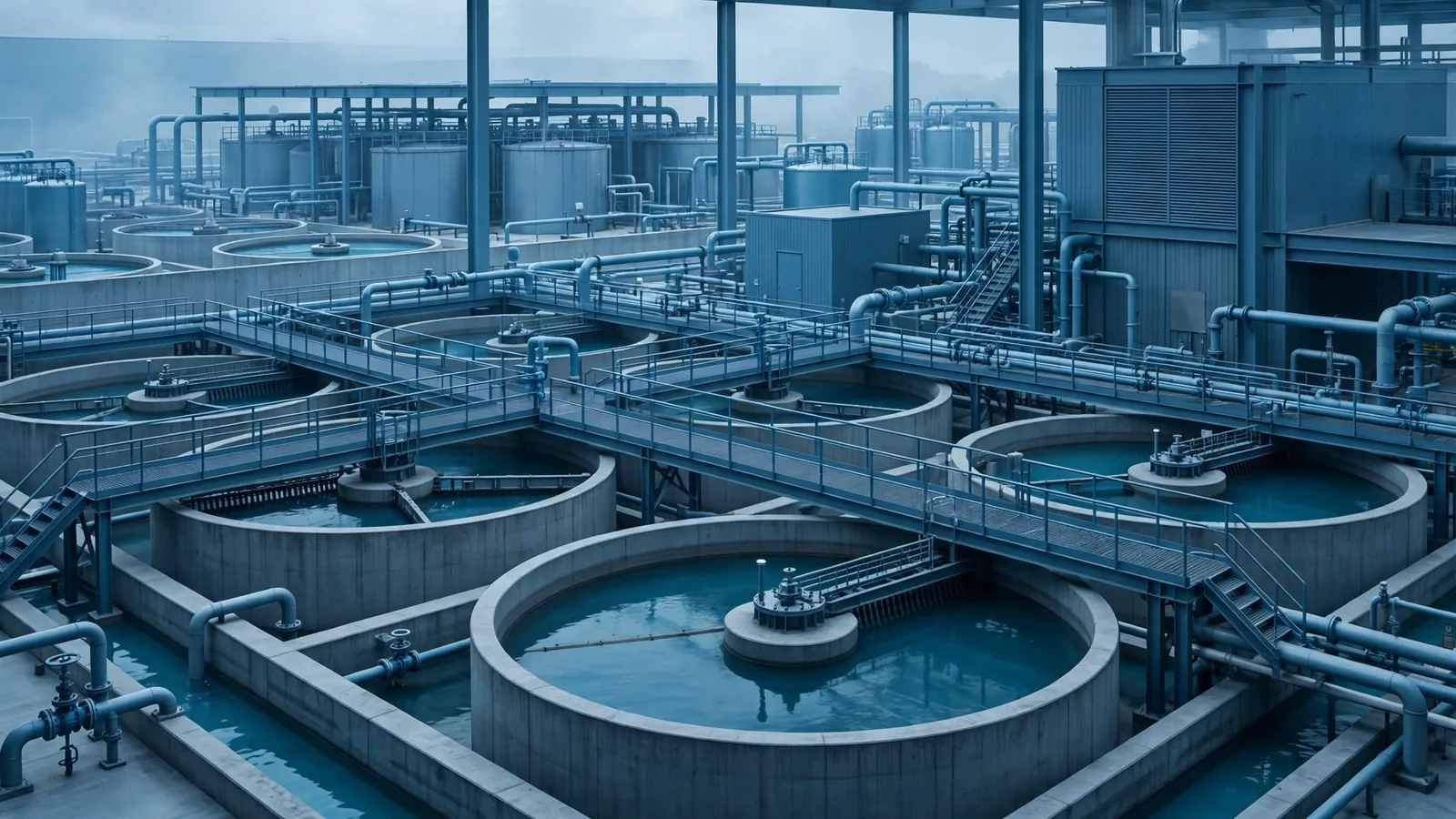
USA: Water Systems Under Attack — Minnesota & 12 States, July 2026
In the last week of July 2026, water systems across the United States came under a coordinated attack. In Minnesota alone, more than 30 community water systems were hit. In Braham, the treatment plant was taken offline and staff raced to restore operations before stored water ran low. In Plymouth, communications to water towers and wastewater pumping were disrupted. By August, incidents had been reported in at least 12 states, and the US cyber security agency said more than 100 water and wastewater systems had been targeted in July. The attackers went after the small industrial computers — PLCs — that control pumps, valves and treatment. Drinking water safety was not reported affected. But the attack showed how exposed America's water infrastructure is.
In short
Attribution: General campaign attributed to Iranian-affiliated APT actors (IRGC Cyber-Electronic Command / CyberAv3ngers ecosystem) in CISA advisory AA26-097A; NO official attribution of the specific Minnesota / July multi-state wave to a named actor as of the sources checked (Aug 2026). CyberAv3ngers and a group calling itself 'APT Iran' claimed responsibility for Minnesota — claims, NOT official attribution. Coordinated incidents hit Minnesota on 26-27 July 2026 (Eastern / Central Time): more than 30 community water systems, including Braham, where the treatment plant was taken offline; Plymouth, where cellular communications to water towers and wastewater pumping were disrupted; and South St Paul and Maple Plain, where automated controls were affected but supply was maintained. By August 2026, incidents had been reported in at least 12 US states, and CISA reported malicious activity targeting more than 100 internet-exposed water and wastewater systems in July 2026. The attackers exploited internet-exposed PLCs — Rockwell Automation / Allen-Bradley MicroLogix 1100/1400, Schneider BMX P34 / Modicon M340, and Siemens S7-1200 — modifying control logic, disabling shutdown and alarm logic, and spoofing control screens. Drinking-water safety was NOT reported affected. The FBI / EPA Public Service Announcement was issued 30 July 2026 (modified 6 August 2026).
What happened in Minnesota on 26-27 July 2026
Attribution: No official attribution of the specific Minnesota wave to a named actor; claims by CyberAv3ngers and 'APT Iran' only. The coordinated incidents in Minnesota took place on 26-27 July 2026. More than 30 community water systems in the state were affected. In Braham, the treatment plant was taken offline, and staff raced to restore operations before stored water ran low — the most urgent moment in the whole campaign, because a town's water supply depends on stored water once treatment stops. In Plymouth, cellular communications to water towers and wastewater pumping stations were disrupted. In South St Paul and Maple Plain, automated controls were affected but the water supply was maintained. The pattern was consistent: control systems disrupted, water still flowing, operators working manually to keep it that way.
The FBI and the Environmental Protection Agency issued a Public Service Announcement on 30 July 2026, modified on 6 August 2026. CISA's advisory AA26-097A, first published on 7 April 2026 and updated on 22 and 28 July 2026, covered the wider campaign. A second advisory, AA26-231A, was published on 19 August 2026 by CISA with the NSA, FBI, Department of Energy and EPA. The two advisories are different documents about different things, and this page keeps them separate — see the section below.
The PLCs: small computers, big consequences
The attackers targeted programmable logic controllers — PLCs — the small industrial computers that run pumps, valves, treatment processes and alarms in water systems. The models named in the advisories were Rockwell Automation / Allen-Bradley MicroLogix 1100 and 1400, Schneider BMX P34 and Modicon M340, and Siemens S7-1200. These are common, widely deployed controllers, and the vulnerability was not a flaw in any one of them. It was exposure: the PLCs were reachable from the internet, and the attackers could reach them, log in, and change what they did.
What the attackers did once inside was more alarming than the entry itself. They modified control logic, disabled shutdown and alarm logic, and spoofed control screens — so that the screens operators looked at showed normal readings while the underlying process was being changed. Disabling alarms is the critical detail: it means the system's own warnings were silenced, and operators could not rely on their instruments to tell them something was wrong. That is the same technique used in the most serious industrial attacks — the safety systems are attacked first, so that the process attack goes unnoticed. In Minnesota, the operators noticed anyway, and worked manually to keep water flowing. But the attack demonstrated that the capability existed.
Twelve states, more than a hundred systems
Minnesota was the most documented, but it was not the only state. By August 2026, incidents had been reported in at least 12 US states, and CISA reported malicious activity targeting more than 100 internet-exposed water and wastewater systems in July 2026 alone. The campaign was therefore national in scope, not a single-town incident. The water systems hit were mostly small community systems — the kind run by a town or a small utility, with limited staff and limited cyber-security budgets. That is a structural feature of American water infrastructure: thousands of small systems, many with internet-exposed controllers, few with dedicated security staff.
No confirmed injuries and no outages of drinking water were reported in the sources checked, and drinking-water safety was not reported affected. That is important to state plainly, because the fear around a water-system attack is contamination, and there is no evidence of contamination in this campaign. The harm was operational: plants taken offline, communications disrupted, controls affected, operators forced onto manual procedures. The risk, however, is obvious. A water system whose alarms are disabled and whose control logic is changed is a water system that cannot be trusted to keep its water safe, even if no contamination occurred this time.
Two advisories, two different warnings
Attribution: AA26-097A attributes the PLC campaign in general to Iranian-affiliated actors; AA26-231A names NO country or group. CISA advisory AA26-097A, first published 7 April 2026 and updated 22 and 28 July 2026, attributes the PLC campaign in general to Iranian-affiliated APT actors in the IRGC Cyber-Electronic Command / CyberAv3ngers ecosystem, and says the activity had been going on since at least March 2026 with the aim of causing disruptive effects. That is a general attribution of a campaign, not a specific attribution of the Minnesota wave: as of the sources checked (August 2026), no official attribution of the specific Minnesota / July multi-state wave to a named actor had been made.
Advisory AA26-231A, published 19 August 2026 by the NSA, CISA, FBI, Department of Energy and EPA, is a different warning. It describes AI-generated exploitation scripts — python-snap7 / snap7, disguised as monitoring tools — used for reconnaissance and capability development against internet-exposed Siemens S7-200/300/400/1200/1500 PLCs. AA26-231A names no country and no group, and reports no confirmed destructive event. It must not be attributed to Iran. The two advisories are often confused in secondary reporting; this page keeps them apart because attributing AA26-231A to Iran would be wrong.
Claims, not attribution
Attribution: Claimed only. CyberAv3ngers and a group calling itself 'APT Iran' claimed responsibility for Minnesota. Those are claims, not official attribution, and this page treats them as such. CyberAv3ngers is a known actor in the IRGC ecosystem — the group behind earlier attacks on Israeli and American water systems — which makes the claim plausible, but plausibility is not proof, and the US government had not, as of August 2026, officially attributed the specific July wave to any named actor. The Center for Strategic and International Studies assessed the pattern as consistent with a possible Iranian campaign, which is an analytical judgement, not an attribution.
The distinction matters because of what happened in France in the same period. There, the government waited a month, built a forensic case, and then attributed the October fridge attack to a named Iranian unit. In the US water case, that step had not been taken as of August 2026. Readers should not treat the general campaign attribution in AA26-097A as if it were a specific attribution of the Minnesota incidents. It is a statement about a pattern of activity, and the specific incidents remain unattributed in the public record.
The wider context: Volt Typhoon and the exposed grid
The Minnesota campaign did not happen in isolation. A separate, documented threat — Volt Typhoon, a China-linked APT — had been pre-positioning inside US electric utility operational-technology networks, including nearly a full year of unauthorised access (February-November 2024) inside a Massachusetts public power utility's OT network. As of 2026, no US agency had confirmed complete eradication nationally. Volt Typhoon is espionage and pre-positioning, NOT a confirmed blackout or destructive attack, and this page does not present it as one. It is included because it shows the same structural problem from a different direction: critical infrastructure with internet-exposed control systems, accessed by state-linked actors, over long periods, without detection.
The fix, in both cases, is the same and is unglamorous: take PLCs off the internet, require strong authentication and multi-factor authentication for remote access, segment operational networks from business networks, and monitor for unauthorised changes to control logic. The FBI / EPA announcement and the CISA advisories all gave that guidance. The reason the guidance keeps being repeated is that the exposure keeps being found — more than 100 systems in a single month, in the richest country in the world, in the infrastructure that delivers drinking water.
Frequently asked questions
Coordinated incidents on 26-27 July 2026 hit more than 30 community water systems. Braham's treatment plant was taken offline, Plymouth lost cellular communications to water towers and wastewater pumping, and South St Paul and Maple Plain had automated controls affected but kept supply running.
No. Drinking-water safety was not reported affected, and no confirmed injuries or drinking-water outages were reported in the sources checked. The harm was operational disruption, not contamination.
CISA advisory AA26-097A attributes the wider PLC campaign to Iranian-affiliated actors, but no official attribution of the specific Minnesota / July wave to a named actor had been made as of August 2026. CyberAv3ngers and 'APT Iran' claimed responsibility; those are claims, not attribution.
A programmable logic controller is a small industrial computer that runs pumps, valves, treatment and alarms. Attackers targeted internet-exposed PLCs — Rockwell MicroLogix, Schneider Modicon and Siemens S7 models — modified their control logic, disabled alarms and spoofed operator screens.
AA26-097A (7 April 2026, updated July) attributes the PLC campaign in general to Iranian-affiliated actors. AA26-231A (19 August 2026) describes AI-generated scripts used for reconnaissance against Siemens S7 PLCs, names no country or group, and reports no confirmed destructive event.
Incidents were reported in at least 12 states by August 2026, and CISA reported malicious activity targeting more than 100 internet-exposed water and wastewater systems in July 2026 alone.
A China-linked APT documented pre-positioning inside US electric utility OT networks, including nearly a year of access (February-November 2024) at a Massachusetts public power utility. It is espionage and pre-positioning, not a confirmed blackout or destructive attack.
Figures are given with their snapshot time and source. Developing items are marked as developing. Last checked Tuesday 17 November 2026, about 12:50 PKT.