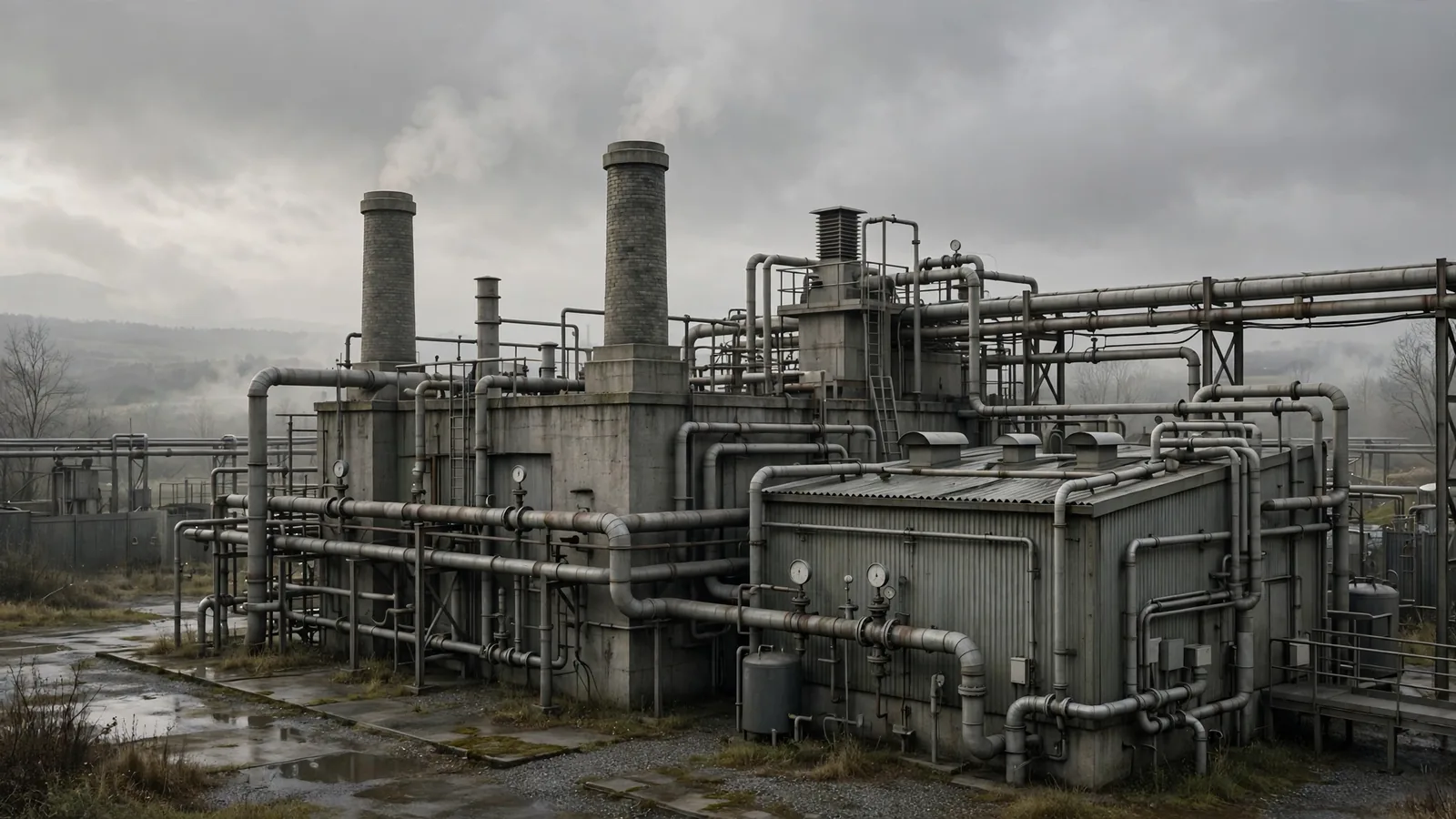
UK: A Power Plant Shut Down for Four Days, July 2026
In July 2026, a cyber incident forced a small-scale power generator in the United Kingdom offline for four consecutive days. It took manual work to bring it back. Nobody lost power, the wider grid was never at risk, and the government described the generator as tiny. The incident matters not because of its scale but because of what it proved: a cyber incident can stop a power plant, and the only reason this one did not become a blackout is that the plant was small. This page gives the verified account — and is careful about the two claims that circulate without official confirmation.
In short
Attribution: Reported as Iran-linked in media; NOT officially confirmed — the UK government has neither confirmed nor denied attribution. In July 2026 (exact date undisclosed), a cyber incident forced a small-scale, gas-fired energy generator in the UK offline for four consecutive days, requiring manual restoration. No consumer outages resulted and the wider grid was never at risk. Minister of State for Energy Security Michael Shanks confirmed a cyber incident had affected a 'small-scale energy generator', said there was no threat to the wider grid and nobody lost power, and described the generator as 'tiny'. The National Cyber Security Centre was involved and energy company chief executives were briefed. The incident was first reported on 22 August 2026 by The Telegraph and confirmed by the UK government the same week. The site's identity has been withheld for security. The technical cause and initial access remain unknown in public reporting.
What happened in July 2026
Attribution: Reported as Iran-linked (Telegraph / Financial Times); NOT officially confirmed. The incident took place in July 2026; the exact date has not been disclosed. A cyber incident affected a small-scale energy generator — gas-fired, according to secondary reporting — and forced it offline for four consecutive days. Restoring it required manual work: the plant could not simply be rebooted. No consumers lost power at any point, and the wider electricity grid was never at risk, because the generator was small and the grid had ample capacity from other sources.
The incident was first reported on 22 August 2026 by The Telegraph, and confirmed by the UK government the same week. Minister of State for Energy Security Michael Shanks confirmed that a cyber incident had affected a 'small-scale energy generator', said 'there was no threat to the wider grid and nobody lost power', and described the generator as 'tiny'. The National Cyber Security Centre was involved in the response, and the chief executives of energy companies were briefed. The identity and location of the site have been withheld for security reasons, which is standard practice for energy infrastructure.
Why four days offline matters more than it sounds
Four days is a long time for a power plant to be down, and the length of the outage is the most informative fact in this incident. A cyber incident that only stole data would not keep a generator offline for four days. A four-day outage with manual restoration means the plant's control systems were unusable and had to be rebuilt or restored by hand — the same pattern as a wiper or a destructive attack on control systems, though the technical cause has not been disclosed and this page does not speculate about it. The plant was small, so the grid absorbed the loss. The same incident at a large plant would have been a different story.
The comparison that matters is Poland, five months earlier. In December 2025, attackers tried to stop Polish power plants with wiper malware and were blocked by detection software. In the UK in July 2026, attackers succeeded in stopping a generator for four days. The difference is scale, not kind: Poland's targets were large and the attack was blocked; the UK target was small and the attack succeeded. A grid made of many small generators is resilient in aggregate, but each individual generator is still a target, and this incident proved that a cyberattack can take one out of service for days.
The Iran link: reported, not confirmed
Attribution: Reported only. The Telegraph and the Financial Times reported that the attack was carried out by Iran-linked hackers. The UK government has NOT publicly confirmed or denied that attribution. This hub therefore reports the Iran link as media reporting, never as official attribution, and readers should treat any account that presents it as established fact as overstating the evidence. Governments sometimes withhold attribution for good reasons — ongoing investigations, intelligence sources, diplomatic timing — but withholding it means the claim is unconfirmed, whatever the reporting says.
The same discipline applies to two other claims about this incident that circulate in secondary and advocacy sources: a figure of 15 MW for the plant's size, and the claim that this was the first time a British power plant had been brought to a standstill by a cyberattack. Neither appears in the UK government's confirmation, which described only a 'small-scale energy generator'. The size and the 'first' claim are therefore NOT published on this page. If The Telegraph or the Financial Times publishes the primary reporting with those details, this page can be updated with a proper citation. Until then, they stay out.
What the government did — and did not — say
The government's handling of this incident is a case study in how little officials say about energy cyber incidents, and why. Minister Shanks confirmed the incident, confirmed the four-day outage, confirmed there was no threat to the wider grid and nobody lost power, and described the generator as tiny. He did not name the site, the operator, the attacker, the malware, or the method of entry. The NCSC's involvement was confirmed; its findings were not published. Energy chief executives were briefed privately. That restraint is deliberate: naming a site invites copycat attacks, and naming an attacker before the evidence is ready creates diplomatic and legal problems.
The briefing of energy chief executives is the detail that shows how seriously the incident was taken behind closed doors. The public message was reassurance — a tiny generator, no grid risk, nobody lost power. The private message, delivered to the people who run the country's energy companies, was evidently different enough to require a briefing. That gap between the public and private handling is normal for critical infrastructure, and it is not evidence of a cover-up. But it is a reminder that the public record on this incident is thin by design, and that the full account — the method of entry, the malware if any, the timeline of detection — may never be published. Readers should judge the incident on what was confirmed, not on what was withheld, and this page records both.
But restraint has a cost. When officials say little, the gap is filled by reporting and speculation, and readers cannot always tell which is which. This page exists to keep that distinction visible: what the government confirmed (a small generator, four days, no outages, no grid risk), what reputable media reported (an Iran link), and what remains unknown (the technical cause, the initial access, the size, and whether this was a first). The incident was also the subject of a debate about whether the threshold for reporting energy cyber incidents should change — covered in legal commentary in August 2026 — because a four-day outage at a 'tiny' generator raises the question of what would have to happen for the public to be told more.
Why this incident belongs in the Phase Black story
The UK generator incident is the closest thing in this hub to a proof of concept for the Netherlands' Phase Black planning. A cyber incident stopped a power plant for four days. The plant was small, so nobody noticed in their homes. But the mechanism — a generator taken out of service by a cyber incident, restored only by manual work — is exactly the scenario that emergency-supermarket planning is built around: power that cannot be relied on, for days, because a digital system failed. The Netherlands' answer is generators at emergency supermarkets and a 15-minute drive for every resident. The UK's answer, in this incident, was that the grid had enough other capacity. Both answers work only up to a point: they depend on the failure staying small.
The incident also belongs here because of its timing. It happened in July 2026, the same month as the US water-system campaign and weeks before the autumn of supermarket-refrigeration attacks. The summer of 2026 was, in retrospect, a season of probing attacks on the systems that keep societies running — water, power, food. None of them, on its own, caused a catastrophe. Together, they are the reason governments from London to The Hague spent the autumn of 2026 writing preparedness plans.
What is still unknown
Attribution: Reported as Iran-linked; not officially confirmed — DEVELOPING as of Tue 17 Nov 2026. The technical cause and initial access remain unknown in public reporting. The exact date in July 2026 has not been disclosed. The plant's size, its operator and its location have not been published. Whether the Iran link reported by The Telegraph and the Financial Times will ever be confirmed by the government is unknown. This page will be updated if the government, the NCSC or the operator publishes more detail, and any update will be dated.
Frequently asked questions
Four consecutive days. The cyber incident forced a small-scale generator offline and manual restoration was required to bring it back.
No. Minister of State for Energy Security Michael Shanks said there was no threat to the wider grid and nobody lost power. The generator was described as tiny.
The Telegraph and the Financial Times reported Iran-linked hackers, but the UK government has not publicly confirmed or denied that attribution. It is reported, not official.
The government has only called it a small-scale energy generator. A 15 MW figure circulates in secondary sources but is not confirmed, so it is not published here.
On 22 August 2026 by The Telegraph. The UK government confirmed it the same week. The incident itself happened in July 2026, on an exact date that has not been disclosed.
That claim appears only in secondary and advocacy sources and is not published here. The government confirmed only that a small-scale generator was affected.
The technical cause and initial access remain unknown in public reporting. The government and the NCSC have not published findings on how the attackers got in.
Figures are given with their snapshot time and source. Developing items are marked as developing. Last checked Tuesday 17 November 2026, about 12:50 PKT.