Albert Heijn Cyberattack: Full Timeline, 11 October – 5 November 2026
On Sunday 11 October 2026, Ahold Delhaize — the parent company of Albert Heijn, Etos and Gall & Gall — detected suspicious activity in its IT infrastructure and took systems offline. Within a day, distribution centres had stopped work, fresh produce was the hardest hit, and home deliveries were suspended for days. This is the full day-by-day timeline, built from the company's own statements and consistent trade-press reporting, with the questions that are still open clearly marked.
In short
Attribution: None — Ahold Delhaize has not named an attacker or an attack type. On Sunday 11 October 2026, Ahold Delhaize detected suspicious activity in its IT infrastructure and took systems offline as a precaution. Albert Heijn, Etos and Gall & Gall websites, apps and customer service went down, logistics systems were switched off and online grocery orders could not be delivered, while physical stores stayed open and tills worked. On Monday 12 October, work stopped in distribution centres, with only Zaandam still operating, and fresh produce was hardest hit. All distribution centres restarted on Wednesday 14 October, home delivery was suspended until at least Tuesday 20 October and all delivery orders up to and including Thursday 22 October were later cancelled, and deliveries resumed gradually from Friday 23 October. On Sunday 19 October the company confirmed the incident resulted from 'malicious actions of others', filed a formal police report the same day, and said it had notified the Dutch NCSC within 24 hours of discovery, with still no evidence sensitive data had been taken. On 4–5 November it estimated the fourth-quarter 2026 impact at EUR 200–250 million lower net sales and EUR 75–100 million lower operating result. The company has not said the incident was ransomware, has not named an attacker, and has not confirmed or denied a ransom demand. It is a separate event from the supermarket refrigeration attacks, and Dutch authorities see no connection between them.
Sunday 11 October: suspicious activity detected
On Sunday 11 October 2026, in the afternoon, Ahold Delhaize detected suspicious activity in its IT infrastructure. The company took systems offline as a precaution — a standard response when an intruder may be inside a network, designed to stop the activity spreading while the investigation begins. The immediate effects were visible to customers the same day: the Albert Heijn, Etos and Gall & Gall websites, apps and customer service went down; logistics systems were switched off; and online grocery orders could not be delivered. Physical stores stayed open and their tills worked, which is an important detail: the incident hit the company's central systems and its logistics, not the point-of-sale systems in the shops. Shoppers could still buy what was on the shelves, but nothing new was arriving to replace it, and nobody could order online. The company's later statements, published in its newsroom update of 19 October 2026, recap these first hours, and The Register's report of 19 October 2026 confirms the same sequence. What the company did not say on 11 October — and has still not said — is who was behind the suspicious activity, how they got in, or what kind of attack it was. The word the company uses, throughout, is "cybersecurity incident", caused by "malicious actions of others". It has not used the word ransomware, and this site does not use it as a description of the incident either, because the company's own wording is the only authoritative description available.
Monday 12 October: distribution centres stop
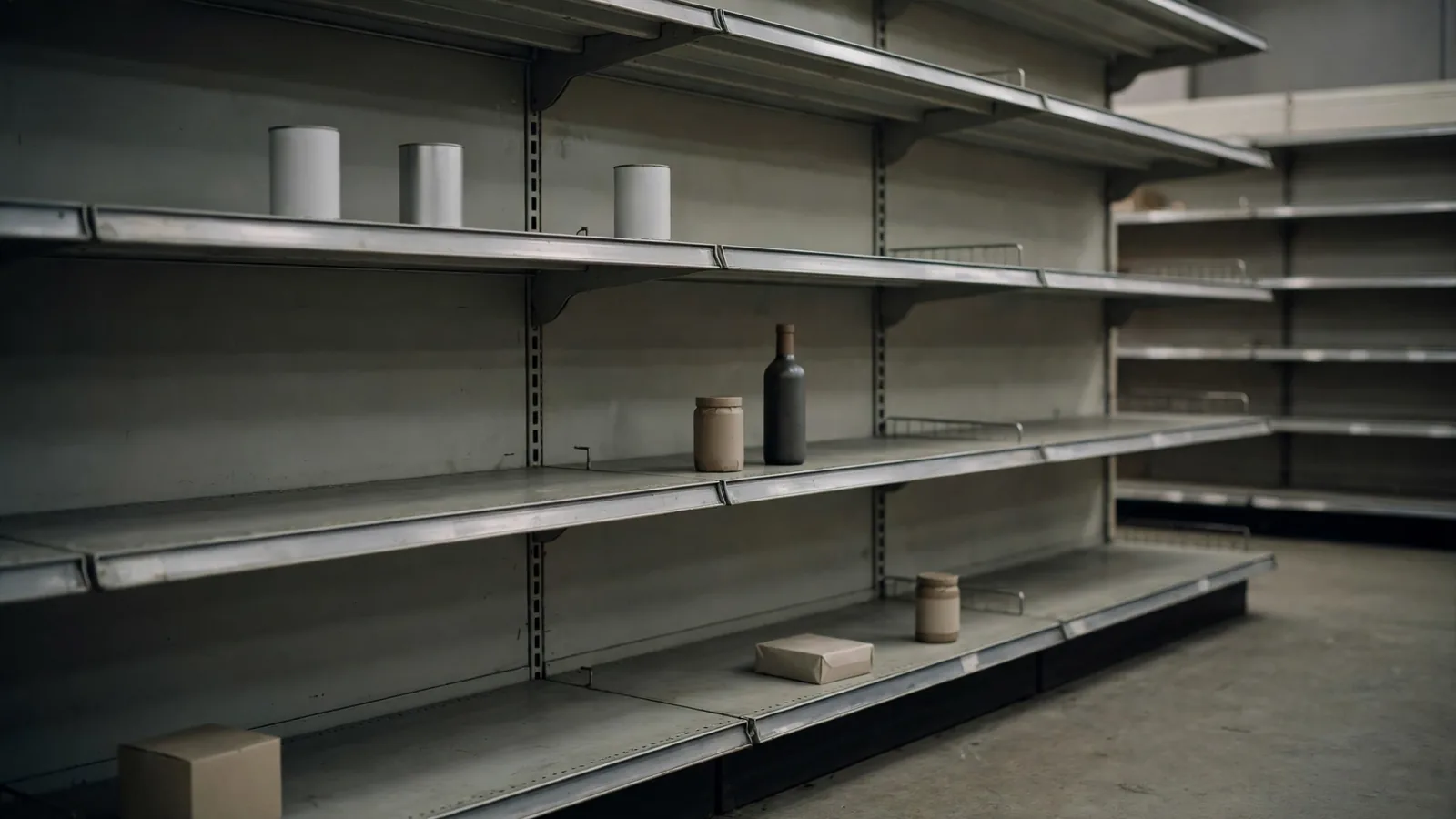
Monday 12 October was the day the incident became a food story. At 08:29 CEST, Ahold Delhaize issued a press release: "Ahold Delhaize is experiencing a security issue within its network… taking some systems offline… stores are open and serving customers." The same day, Albert Heijn chief executive Margaret Versteden-van Duijn told NOS that work had stopped completely in some distribution centres, that fresh produce — fruit and vegetables — was hardest hit, and that shelves would empty if the disruption went on longer. By the evening, work was at a standstill in multiple Albert Heijn distribution centres, with only Zaandam still operating, according to a supplier email obtained by RTL Z and cited in the Garzon Cyber Solutions timeline; suppliers were told to deliver to Zaandam only. The picture is of a logistics system that had been switched off to contain the incident, and that could not be switched back on quickly: distribution centres are the link between suppliers and shops, and when they stop, the shops sell what they have and then run out, starting with the fresh food that turns over fastest. The 12 October statements are also the first point at which the incident's scale became public: this was not a website outage, it was a stoppage of the physical movement of food.
Tuesday 13 to Wednesday 14 October: no data taken, centres restart
On Tuesday 13 October, Ahold Delhaize said there was no evidence at that point that customer, associate or partner data had been taken. That statement — no evidence of data theft — would be repeated, in the same qualified form, for weeks, and it remains the company's position: "no evidence at this moment", not a definitive "no data was taken". The distinction matters, because the investigation was ongoing, and a company that says "no evidence" is describing what it has found so far, not closing the question. On Wednesday 14 October, all Albert Heijn distribution centres restarted during the day. Shelf-stable products returned first, because they are easier to move and store; fresh produce took longer, because it depends on the cold chain and on the daily rhythm of deliveries that had been broken for three days. The restart did not mean recovery: restarting a distribution centre is the beginning of a long process of clearing backlogs, re-establishing ordering, and refilling shelves that had been emptying since Monday. Customers would have seen the effects for days after the centres restarted, and the delivery service — which depends on the same logistics — would take longer still.
Friday 16 to Saturday 17 October: deliveries suspended
On Friday 16 to Saturday 17 October, Albert Heijn said home delivery would be suspended until at least Tuesday 20 October, and all delivery orders up to and including Thursday 22 October were later cancelled. The delivery halt was reported by NOS on 16 October 2026, which also reported that the incident was one of the first major tests of the new Dutch Cyberbeveiligingswet (Cybersecurity Act), in force since 15 August 2026, under which the company was legally required to report the incident to the NCSC within 24 hours. The delivery suspension is the part of the incident that affected the most vulnerable customers most directly: people who depend on home delivery because they cannot easily get to a shop, or cannot carry heavy shopping, lost their food supply for more than a week, while shoppers who could reach a store could still buy what was on the shelves. The NOS reporting of 16 October also carried an unconfirmed detail that this site reports only as such: per sources in the security world, servers in several countries — the United States, Poland, Moldova and Turkey — may have played a role. That is attributed to sources, not stated as fact by NOS, and it is not treated here as an attribution of the attack.
Sunday 19 October: 'malicious actions of others'
Sunday 19 October was the day the company gave its fullest account. Ahold Delhaize confirmed the incident resulted from "malicious actions of others"; filed a formal police report with the Dutch police the same day; said it had notified the Dutch NCSC within 24 hours of discovery; and repeated that there was still no evidence sensitive data had been taken. Chief executive Frans Muller apologised to customers. The company's newsroom update of 19 October 2026 is the primary source for the whole timeline, and The Register's report of the same day confirms the key points. Two things are notable about the 19 October statement. First, the phrase "malicious actions of others" is deliberately broad: it confirms the incident was caused by people, not by an accident or a system failure, but it does not say who those people were, what they did, or what they wanted. Second, the police report and the NCSC notification show the incident was treated from the start as a crime and as a matter for the national cybersecurity authorities, under the new Cyberbeveiligingswet and the Wet weerbaarheid kritieke entiteiten (Critical Entities Resilience Act), both in force since 15 August 2026. The company's website and its Mijn AH app came back online from around 19 October, and home deliveries resumed gradually from Friday 23 October.
4–5 November: the bill — EUR 200–250 million
The financial scale of the incident became clear on 4–5 November 2026. Ahold Delhaize estimated the fourth-quarter 2026 impact at EUR 200–250 million lower net sales and EUR 75–100 million lower operating result, lowered its 2026 guidance, and said a controlled relaunch of certain systems was under way on 5 November. The figures were reported by Freeke Cybersecurity, updated 4 November 2026, and by Tech-Insider. They are the most concrete measure of what a cyber incident does to a supermarket group: not just the cost of the investigation and the recovery, but weeks of lost sales — empty shelves, cancelled deliveries, customers shopping elsewhere — and a lower operating result that reflects both the lost margin and the cost of putting the systems back together. The controlled relaunch is also significant: systems were not simply switched back on, they were brought back in a controlled way, which is standard practice after an intrusion, because a system that is restored too quickly can restore the intruder's access with it. By early November, the incident was therefore in its final phase as an operational disruption, but not as an investigation: the attacker, the method and the data question were all still open, and they remain open as of 17 November 2026.
What is still unknown
Three questions remain open, and this site states them as open rather than filling them with speculation. First, who did it? Ahold Delhaize has not named an attacker, and no attribution has been confirmed. Second, what kind of attack was it? The company calls it a cybersecurity incident caused by malicious actions of others. It has not said it was ransomware, has not named an attack type, and has not confirmed or denied a ransom demand. Outside experts have called an attack "very likely", but that is not the company's description, and this site uses the company's wording. Third, was any data stolen? The company's position, repeated on 19 October and again on 4–5 November, is that there is no evidence at this moment that sensitive data was taken, and the investigation is ongoing. That is not a settled "no", and it should not be reported as one. A fourth point is a negative one, and it matters for the whole hub: the Ahold Delhaize incident and the supermarket refrigeration attacks are separate events. Dutch authorities see no connection between them, and the company has said nothing linking them. The two are linked in the fase zwart story only because CBL director Marc Jansen cited both as reasons the sector's preparation has accelerated — not because they were connected, but because together they showed how fast problems can arise.
Frequently asked questions
Ahold Delhaize detected suspicious activity in its IT infrastructure on Sunday 11 October 2026, in the afternoon, and took systems offline as a precaution. Distribution centres stopped work on Monday 12 October.
Home delivery was suspended until at least Tuesday 20 October 2026, all delivery orders up to and including Thursday 22 October were later cancelled, and deliveries resumed gradually from Friday 23 October.
No. Physical stores stayed open and their tills worked throughout. The incident hit central IT and logistics systems, so shelves emptied because nothing new was arriving, but shoppers could still buy what was on the shelves.
Ahold Delhaize estimated the fourth-quarter 2026 impact at EUR 200–250 million lower net sales and EUR 75–100 million lower operating result, announced 4–5 November 2026.
Attribution: None. Ahold Delhaize has not named an attacker. The company confirmed on 19 October 2026 that the incident resulted from 'malicious actions of others' and filed a formal police report the same day, but it has not identified who was responsible.
The company has not said so. It calls the event a 'cybersecurity incident' caused by 'malicious actions of others'. It has not named an attack type and has not confirmed or denied a ransom demand, so this site does not describe it as ransomware.
Open, as of 17 November 2026. The company's position is that there is no evidence at this moment that sensitive data was taken, and the investigation is ongoing. That is not a settled 'no'.
No verified connection. Dutch authorities see no connection between the Ahold Delhaize incident and the refrigeration-controller attacks. They are separate events that CBL cited together as reasons to accelerate preparation.
The Dutch Cybersecurity Act, in force since 15 August 2026. Under it, Ahold Delhaize was legally required to report the incident to the NCSC within 24 hours of discovery, which the company said it did.
All distribution centres restarted on Wednesday 14 October 2026, the website and Mijn AH app came back online from around 19 October, and home deliveries resumed gradually from Friday 23 October. A controlled relaunch of certain systems was under way on 5 November.
Figures are given with their snapshot time and source. Developing items are marked as developing. Last checked Tuesday 17 November 2026, about 12:50 PKT.