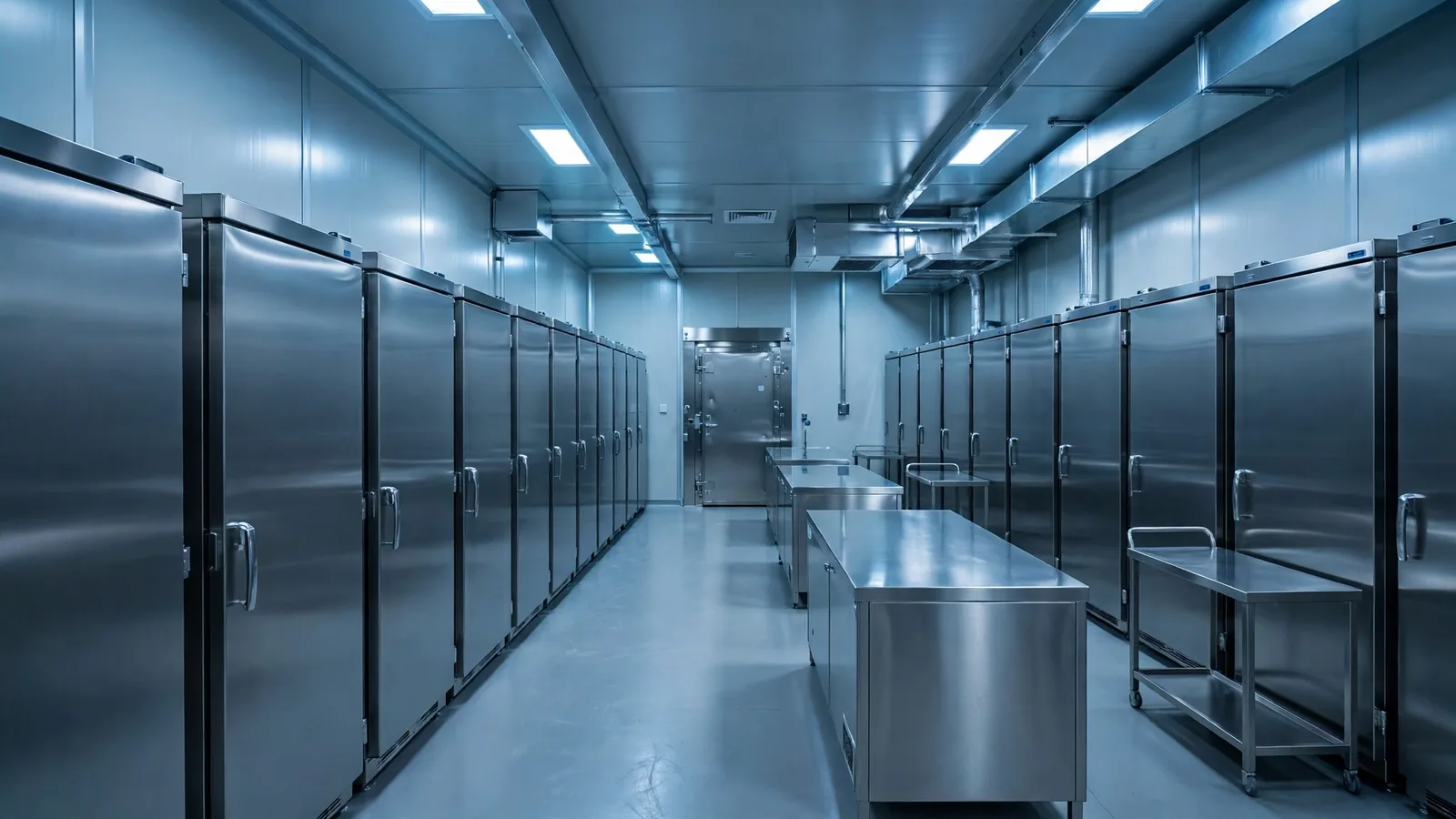
France: Blood Bank Freezers Targeted — EFS, 1-2 November 2026
On the same night that supermarket fridges were hacked across Europe, a different kind of cold storage was targeted in France: the plasma cold rooms of the Etablissement francais du sang, the country's sole civilian blood collection and transfusion organisation. Temperature setpoints were raised to extremely high levels. The blood service's monitoring and alarms caught the rise, plasma was moved to other sites, and — by the organisation's own account — no blood products were lost, no patient was affected, and collection and distribution were not interrupted. This page gives the verified account, and is explicit about what it does not prove.
In short
Attribution: None confirmed — no claim of responsibility, and French officials have NOT linked it to the supermarket attacks. Overnight on 1-2 November 2026, Central European Time, the temperature / defrost thresholds on plasma cold rooms at three Etablissement francais du sang (EFS) sites were raised to extremely high levels. One site was named in secondary reporting as Besancon. EFS is France's sole civilian blood collection and transfusion organisation, supplying about 1,900 hospitals and clinics. Le Canard enchaine (4 November edition) reported that rooms normally held at minus 30 degrees Celsius were set to climb to 110 degrees Celsius — a setpoint, not a measured temperature reached. The attack hit a refrigeration supplier, not EFS's own network: Coolworld Rentals confirmed an incident in its remote monitoring software affecting a limited number of units, blaming a third-party component outside its control. EFS monitoring and alarms caught the rise and plasma was moved to other sites. Per the EFS statement of late 3 November 2026, NO blood products were lost, NO patient was affected, and there was NO interruption to collection or distribution. ANSSI and the French Health Ministry are investigating.
What happened on the night of 1-2 November 2026
Attribution: None confirmed. The incident took place overnight on 1-2 November 2026, the same night as the second supermarket-refrigeration wave across Europe. The target was three plasma cold-storage sites belonging to the Etablissement francais du sang (EFS), France's sole civilian blood collection and transfusion organisation, which supplies about 1,900 hospitals and clinics. The temperature and defrost thresholds on the plasma cold rooms were raised to extremely high levels. Le Canard enchaine, in its 4 November edition, reported that rooms normally held at minus 30 degrees Celsius were set to climb to 110 degrees Celsius.
That 110-degree figure needs careful handling. It was a setpoint — the temperature the system was told to reach — not a measured temperature that the rooms actually reached. The distinction matters: a setpoint of 110 degrees does not mean plasma was heated to 110 degrees. What matters is that the threshold was raised far beyond any safe level, and that the monitoring and alarm systems caught the rise before product was lost. EFS issued its statement late on 3 November 2026, and the French health authorities and ANSSI opened investigations. The timing of the statement — a day after the incident — reflects the time needed to verify that no product had been lost and no patient had been affected before saying so publicly.
The supplier, not the blood service
The attack did not hit EFS's own network. It hit a refrigeration supplier. Coolworld Rentals, which supplies refrigeration equipment and remote monitoring, confirmed an incident in its remote monitoring software affecting a limited number of units, and blamed a third-party component outside its control. That is a supply-chain attack in the precise sense: the target's systems were reached through a vendor's software, not through the target's own defences. The same pattern appears elsewhere in this hub — the Polish attackers entered through a wind farm to reach a power plant, and the Asahi attackers entered through network equipment at a Group site.
The supply-chain route is what makes this incident important beyond its own outcome. EFS is a well-defended, nationally critical organisation. Its own network was not breached. But its cold storage depended on a supplier's remote monitoring software, and that software was the way in. Organisations that secure their own networks but not their suppliers' access to their systems have secured only half the problem. The Coolworld incident is a reminder that the question is not only 'is our network secure?' but 'who else can reach our equipment, and how well is their software secured?'
Why no blood was lost
Per the EFS statement of late 3 November 2026, no blood products were lost, no patient was affected, and there was no interruption to collection or distribution. Three things made that outcome possible. First, monitoring and alarms: the temperature rise was detected by EFS's own monitoring, which is designed to catch exactly this kind of excursion. Second, redundancy: plasma could be moved to other sites, so the affected cold rooms were not a single point of failure for the national supply. Third, speed: the response happened before the setpoint translated into actual product loss.
The outcome is the opposite of the supermarket wave the same night, where food was spoiled by the tonne. The difference is not luck. It is the difference between a system with alarms, redundancy and a rehearsed response, and a system of internet-exposed controllers with default credentials. EFS had the defences that the supermarkets lacked, and the defences worked. That is a useful finding for preparedness planning: cold chain can be defended, and the EFS case shows what a defended cold chain looks like under attack.
Not linked to the supermarket attacks
Attribution: None confirmed, and no link established. French officials have NOT linked the EFS incident to the supermarket-refrigeration attacks, even though they happened on the same night and used a similar method — raising temperature thresholds on refrigeration equipment. This hub does not link them either. Same night and same method are not the same as same attacker, and the public evidence does not establish a connection. The EFS incident involved a supplier's remote monitoring software; the supermarket wave involved Danfoss controllers. The two entry points are different, the targets are different, and no authority has said they are connected.
Readers should be wary of accounts that present the EFS incident and the supermarket wave as a single coordinated attack on France's cold chain. That is a plausible narrative and an unproven one. It is possible that the same actor was behind both, and it is possible that two different actors used a similar method on the same night — the second wave having been widely reported, the method was public. Until an authority establishes a link, the honest statement is that the two incidents coincided and are not known to be connected. This page will be updated if ANSSI or the Health Ministry says otherwise.
What the incident means for blood and medicine
Blood is different from food in one respect that matters for cyber security: it cannot be replaced quickly, and its supply depends on donors. A disruption to plasma storage does not just spoil a product; it threatens the supply to about 1,900 hospitals and clinics that depend on EFS. The fact that no product was lost and no patient was affected is therefore not a minor detail. It is the outcome that the whole response was designed to protect, and it held.
The incident also shows why cold chain is now a security issue, not only a logistics issue. Plasma must be kept at minus 30 degrees. Supermarket food must be kept frozen or chilled. Vaccines, medicines and laboratory samples all depend on the same kind of temperature-controlled storage, managed by the same kind of networked controllers. The EFS attack demonstrates that those controllers are targets, and that the defence is monitoring, alarms, redundancy and supplier security. The supermarkets learned the same lesson the hard way, in the same night, with food instead of plasma.
The redundancy point deserves emphasis, because it is the cheapest lesson in this incident. EFS could move plasma to other sites because it had other sites with the right storage, and because its monitoring told it in time that a move was needed. Redundancy only works if it is paired with detection: a backup cold room is useless if nobody knows the first one is failing. The supermarkets in the November wave had neither — controllers that could be reached and changed remotely, with no alarm that reached anyone in time to save the stock. For any organisation that stores temperature-sensitive goods, the EFS case is the model: monitor continuously, alarm on excursion, keep a second site ready, and know which of your suppliers can reach your equipment. None of that requires new technology. It requires the controls to be in place before the night they are needed.
What is still unknown
Attribution: None confirmed — DEVELOPING as of Tue 17 Nov 2026. No claim of responsibility has been made for the EFS incident, and no attribution has been confirmed. Which third-party component in Coolworld's software was involved has not been named in the sources checked. Whether the incident is linked to the supermarket wave is not established. The ANSSI and Health Ministry investigations were ongoing as of the sources checked. This page will be updated if an attribution is made or a link is established, and any update will be dated.
Frequently asked questions
Temperature thresholds on plasma cold rooms at three EFS sites were raised to extremely high levels overnight. EFS monitoring caught the rise, plasma was moved to other sites, and no blood products were lost.
No. Per the EFS statement of late 3 November 2026, no blood products were lost, no patient was affected, and collection and distribution were not interrupted.
The Etablissement francais du sang, France's sole civilian blood collection and transfusion organisation, supplying about 1,900 hospitals and clinics.
Through a refrigeration supplier, not EFS's own network. Coolworld Rentals confirmed an incident in its remote monitoring software affecting a limited number of units, blaming a third-party component outside its control.
No — 110 degrees Celsius was the setpoint the system was told to reach, reported by Le Canard enchaine, not a measured temperature the rooms reached. The rooms are normally held at minus 30 degrees.
Not established. French officials have not linked the EFS incident to the supermarket attacks, even though they happened the same night. This page does not link them either.
Nobody confirmed. No claim of responsibility has been made, and no attribution has been confirmed. ANSSI and the French Health Ministry are investigating.
Figures are given with their snapshot time and source. Developing items are marked as developing. Last checked Tuesday 17 November 2026, about 12:50 PKT.