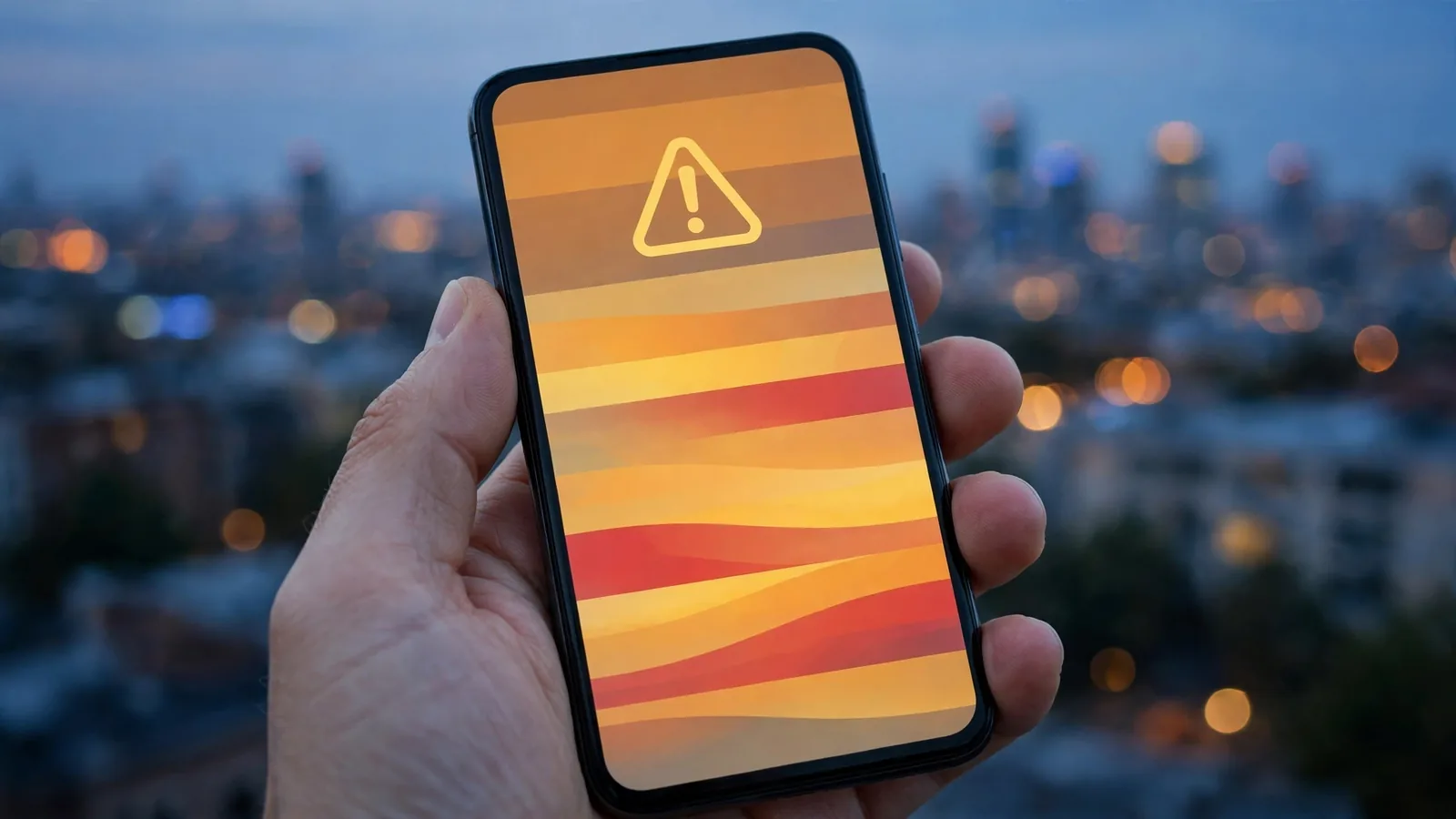
How You Will Be Warned: NL-Alert, Sirens and Radio
If a crisis hits the Netherlands — a blackout, a cyberattack, a flood, a war threat — how will you know? The answer is a system with three parts: NL-Alert, the text message that arrives on your phone; the public warning sirens, tested on the first Monday of every month at noon; and the radio, the fallback when everything else fails. This page explains how each part works, when it is tested, and what to do when you hear it for real.
In short
The Netherlands warns the public through NL-Alert, the sirens and radio. NL-Alert test messages are sent twice a year — on the first Monday of June and December, around noon, according to The Dutch Daily on 14 November 2026. Public warning sirens are tested on the first Monday of every month at 12:00 noon, sounding for 1 minute 26 seconds; if heard at any other time, go inside, close windows and doors, and follow radio and television, according to Netherlands Magazine and The Dutch Daily. In June 2026 the government confirmed a new siren network will be built, linked to a Defence detection system for military threats, with nationwide coverage and central control — after the old network of about 4,200 poles was due to be phased out from 1 January 2028 for lack of funds. The warning system matters for the fase zwart story because a noodwinkel plan is useless if people do not know a crisis is happening, where to go, and what to do — and because in a blackout or a cyberattack, the phone and internet channels the public relies on may themselves be down, leaving sirens and battery radio as the channels that still work.
NL-Alert: the message on your phone
NL-Alert is the Dutch government's public warning system for mobile phones. When there is an emergency in your area — a fire, a flood, a chemical incident, a blackout, a terrorist threat — the government can send an NL-Alert text message to every mobile phone in the affected area, using cell broadcast, which works even when the mobile network is congested. The message tells you what is happening and what to do. Test messages are sent twice a year — on the first Monday of June and December, around noon — according to The Dutch Daily on 14 November 2026. The tests are important: they check that the system works, and they teach the public to recognise the sound — a loud, piercing alarm tone that is different from a normal text message — so that when a real alert arrives, people do not dismiss it. NL-Alert is also the channel that would be used to tell people about a food emergency: where the noodwinkels are, when they open, what they sell, and what to bring. That is why the NL-Alert system matters for the fase zwart story, and why its reliability in a blackout is a question worth asking. Cell broadcast does not need the internet, but it does need the mobile network and a charged phone — and in a prolonged blackout, both are at risk, which is why the sirens and the radio matter as fallbacks.
The sirens: first Monday, noon, 1 minute 26 seconds
The public warning sirens are the oldest part of the Dutch warning system, and the most recognisable. They are tested on the first Monday of every month at 12:00 noon, sounding for 1 minute 26 seconds, according to Netherlands Magazine and The Dutch Daily. Most Dutch residents know the sound — a rising and falling tone, loud enough to be heard outdoors — because they hear it every month. The rule is simple and is worth memorising: if you hear the siren at any other time than the first Monday at noon, go inside, close the windows and doors, and follow the radio and television for instructions. The monthly test is both a technical check and a public rehearsal: it confirms the sirens work, and it reminds everyone what to do. The siren network is a physical system — poles with loudspeakers, spread across the country — and it does not depend on the mobile network or the internet. That independence is its strength in a cyberattack or a blackout: the sirens can sound when the phones are silent. But the sirens can only say one thing — "go inside and listen" — and the detail of what is happening, and what to do next, has to come from another channel, which is why the radio is the third part of the system.
A new siren network, linked to Defence
In June 2026, the government confirmed that a new siren network will be built, linked to a Defence detection system for military threats, with nationwide coverage and central control. The decision came after the old network — about 4,200 poles — was due to be phased out from 1 January 2028 for lack of funds. The new network reverses that phase-out and upgrades it: instead of a system built for peacetime accidents, the Netherlands will have a system built, in part, for military threats, connected to the Defence detection systems that would warn of an attack, and controlled centrally so it can be sounded nationwide at once. The June 2026 decision is reported consistently in secondary sources, though the rijksoverheid letter itself was not opened in the research for this site, so this page marks the sourcing accordingly. The decision matters for the fase zwart story because it shows the same shift as the noodwinkel plan: a system built for one kind of emergency (a fire, a flood, a chemical leak) is being rebuilt for another (war, a large-scale cyberattack, a nationwide blackout). The sirens, the noodwinkels and the Denk vooruit campaign are all parts of the same shift — from a preparedness system designed for local accidents to one designed for national disruption — and the new siren network is the audible evidence of that shift.
Radio: the channel that still works
When the power is out, the internet is down and the mobile network is congested or dead, the radio still works — if you have a battery or wind-up radio, and if you know which station to listen to. That is why a battery or wind-up radio is in the official noodpakket, and why the Denk vooruit booklet tells households to keep one. In a blackout, the national and regional public broadcasters continue to transmit emergency information, and the siren instruction — "follow radio and television" — assumes the radio is available. The radio's strength is its simplicity: it needs a battery, an aerial and a signal, not a network, not a subscription, not a charged phone. Its weakness is that it is one-way — it can tell you what to do, but it cannot tell the authorities what you need — and that it depends on the broadcasting infrastructure itself having power, which is why the emergency broadcasting plans in other countries, such as the UK's Black Sky plan covered in the preparedness hub, treat the broadcasters as critical infrastructure. For a household, the practical step is simple: keep a battery or wind-up radio in the noodpakket, with spare batteries, and know the frequency of the regional public broadcaster. For the country, the practical question is whether the broadcasters can stay on air in a prolonged blackout — a question the new siren network, linked to Defence, does not answer on its own.
What to do when you hear the siren for real
The instruction is short, and it is worth learning before it is needed. If you hear the siren at any time other than the first Monday of the month at noon, go inside immediately, close the windows and doors, and switch on the radio or television for instructions. Do not go outside to look, do not call the emergency number for information — the lines are needed for emergencies — and do not assume the siren is a test. The instruction to go inside and close windows and doors was designed for chemical incidents and fires, where the danger is in the air, but it is the general instruction for any siren sounding, and the radio will tell you if the danger is different — a flood, a blackout, a cyberattack — and what to do instead. If you are in a car, drive to the nearest building and go inside. If you are with children, take them with you. And if you have a noodpakket, this is the moment to check it: water, food, torch, radio, cash. The siren is not a signal to panic; it is a signal to go inside and listen, and the listening is the important part. The monthly test is the time to practise: when the siren sounds on the first Monday at noon, check that you know where your radio is, that it works, and that you know what you would do if the sound were real.
Warnings and the noodwinkel plan
The warning system and the noodwinkel plan depend on each other. A noodwinkel network is useless if people do not know it exists, where their nearest noodwinkel is, when it opens, and what it sells — and in a crisis, that information has to reach people whose phones may be dead and whose internet may be down. NL-Alert can reach the phones that are still working; the sirens can tell everyone to go inside and listen; the radio can carry the detail. But none of those channels, as of 17 November 2026, has been described as the channel for noodwinkel information, because the noodwinkels do not exist yet and the communication plan for them has not been decided. That is one of the undecided questions the living "what is not decided" page tracks: who will tell the public, through which channel, and with what information. The warning system is ready — it is tested monthly, it is being rebuilt for military threats, and it has a radio fallback. The message it will carry, when the noodwinkels are real, is not yet written. Readers who want to be ready can do two things now: make sure their phone receives NL-Alert test messages, and put a battery radio in their noodpakket.
Frequently asked questions
Twice a year — on the first Monday of June and December, around noon, according to The Dutch Daily on 14 November 2026.
On the first Monday of every month at 12:00 noon, sounding for 1 minute 26 seconds.
Go inside, close the windows and doors, and follow the radio and television for instructions. Do not call the emergency number for information.
1 minute 26 seconds, on the first Monday of every month at noon.
Yes — in June 2026 the government confirmed a new siren network will be built, linked to a Defence detection system for military threats, with nationwide coverage and central control. The old network of about 4,200 poles had been due to be phased out from 1 January 2028.
The Dutch government's public warning system for mobile phones. It sends a text message, by cell broadcast, to every phone in an affected area, telling people what is happening and what to do.
Because the radio still works when the power, the internet and the mobile network fail. A battery or wind-up radio is the fallback channel for official information in a blackout or cyberattack.
That has not been decided. No noodwinkel has been designated, and no communication plan for telling the public has been published, as of 17 November 2026. NL-Alert, sirens and radio are the channels that would carry the message.
Figures are given with their snapshot time and source. Developing items are marked as developing. Last checked Tuesday 17 November 2026, about 12:50 PKT.