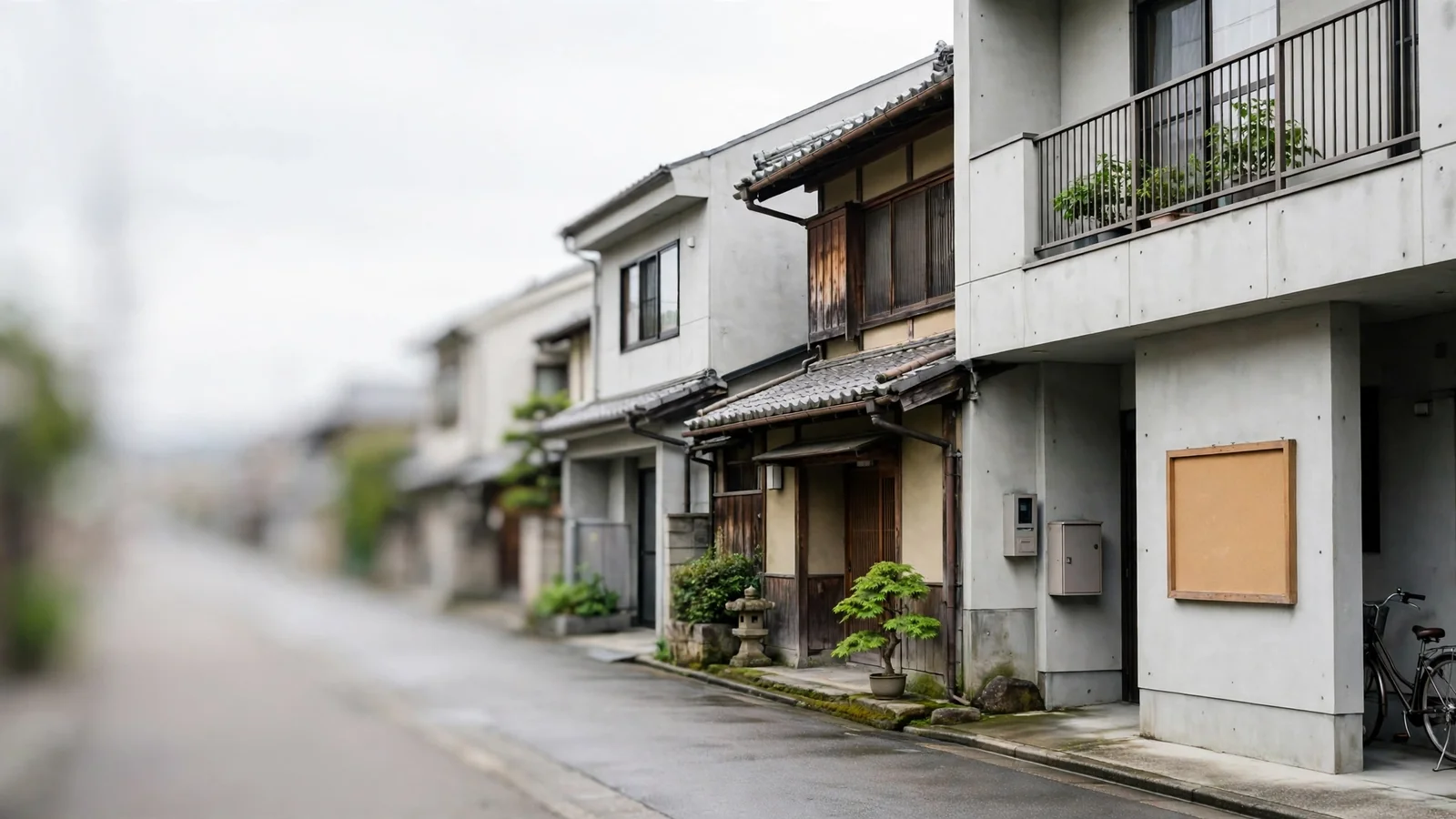
Preparedness Beyond Europe: Japan, Canada, US, and the Countries Still to Verify
Outside Europe the preparedness story is smaller, newer in one case, and much less verified in others. Japan opened a new Disaster Management Agency on 2 November 2026 and issued an urgent request the same day. Canada's Get Prepared programme has advised a minimum of 72 hours for many years. The United States' Ready.gov guidance advises several days. Beyond those three, a long list of countries appears in compilations and timelines, but their per-country durations were not individually verified against an official source in the research for this site, and this page does not publish them. It also flags the Canada water discrepancy, and it corrects a false claim about Australia.
In short
Japan's new Disaster Management Agency opened on 2 November 2026, and its minister, Goshi Hosono, issued an emergency request the same day advising at least three days of supplies, ideally one week, with 3 litres of water per person per day. Canada's Get Prepared programme, run by Public Safety Canada, advises a minimum of 72 hours; its printed guide says 2 litres of water per person per day, while the current canada.ca emergency-kits page says about 4 litres per person per day, and this page quotes both and explains the difference in scope. The United States' Ready.gov Build a Kit page, last updated 1 July 2026, advises several days, with one US gallon, about 3.8 litres, of water per person per day. The per-country durations for Brazil, Chile, Colombia, Argentina, South Africa, Taiwan, Israel, India, Philippines, Singapore, Australia, New Zealand, Mexico, Spain and Turkiye were not individually verified in this research pass and are not published here.
Japan: a new agency, and an urgent request on 2 November 2026
Japan is the clearest new case outside Europe. A new Disaster Management Agency, known in Japanese as Bosai-cho, opened on 2 November 2026. Its minister, Goshi Hosono, issued an emergency request, described in reporting as an urgent request, the same day. The advice is at least three days of supplies, ideally one week, with 3 litres of water per person per day, which is 21 litres per person for a week. Food should be kept for the same period, with the rolling-stock method recommended: using everyday food and replacing what is used, so the stockpile stays fresh. Portable toilets are advised at five to six uses multiplied by the number of people multiplied by seven days, according to the MAFF guide, the Ministry of Agriculture, Forestry and Fisheries home-stockpile guide. Cassette-stove gas is advised at about six cans per person per week. The kit also includes medicines, secured furniture, an emergency bag and evacuation routes. The risks named are the Nankai Trough megaquake, a Tokyo-direct earthquake, and a possible eruption of Mount Fuji. Hosono said he had no specific information about a coming disaster, according to Jiji Press and Nippon.com on 2 November 2026. That statement matters as much as the request itself. Japan's new agency is a response to long-known seismic risks, not a warning of a specific imminent earthquake, and the minister said so on the day the agency opened. Japan's advice of at least three days and ideally one week sits between the European 72-hour floor and the Nordic week, and its rolling-stock method is the most practical food-rotation advice in the research.
Canada: 72 hours, and a water discrepancy to flag
Canada's guidance comes from Public Safety Canada, under the Get Prepared programme on GetPrepared.ca, with a printed guide called Your Emergency Preparedness Guide. The advice is a minimum of 72 hours. The programme is long-standing, described as running for more than 30 years by a Disaster Recovery Institute of Canada instructor quoted in November 2026, and it received renewed attention in November 2026, not a new order. The kit includes food, torches, batteries, first aid, a battery or wind-up radio, and a plan for children, older people, pets and medical needs. The water figures differ between Canada's own sources, and this page flags the discrepancy rather than silently picking one figure. The printed guide says 2 litres of water per person per day. The current canada.ca emergency-kits page says about 4 litres per person per day, in small easy-to-carry bottles. The difference is explained as different scopes: the newer page counts drinking plus cooking plus hygiene, while the printed guide counts drinking. That explanation is plausible, but the canada.ca page itself should be re-read to confirm the scope wording, and this site marks that check as still open. Ontario separately advises 4 litres per person per day. Canada's 72-hour minimum matches the European floor, and its long-standing programme is one reason Canada appears in the Newsweek map of 28 October 2026, which counted 33 countries with standing advice: the map includes long-standing guidance alongside new 2026 campaigns, and Canada is a long-standing case.
The United States: several days, not a fixed number
The United States' household guidance is covered in full on the US preparedness page, and it is summarised here for comparison. FEMA's Ready.gov Build a Kit page, last updated 1 July 2026, advises several days of supplies, with one US gallon, about 3.8 litres, of water per person per day for drinking and sanitation. There is no new federal stockpile campaign and no new federal instruction in 2026. Older Ready.gov material used at least three days, and older guides mention three, seven and even fourteen days depending on location, but the current page says several days. The United States is therefore the least precise of the three verified countries outside Europe, and the most often misreported: it is presented online as a 72-hour country, a three-day country, and a new 2026 stockpile country, and none of those is quite right. It is a several-days country, with long-standing guidance, and it appears in the Newsweek 33-country map for that reason. The American figure that matters for comparison is the gallon: about 3.8 litres per person per day is the highest daily water figure in the research, because it counts drinking and sanitation together, while Germany's 2 litres counts drinking and cooking and the United Kingdom's 3 litres counts drinking, with more for cooking and washing. Water figures are not directly comparable across countries, and the American gallon is the clearest example of why.
The countries still to verify
A long list of countries appears in the Newsweek 33-country map of 28 October 2026 and in other compilations, but their per-country durations were not individually verified against an official source in the research pass for this site, and this page does not publish durations for them. The list is Brazil, Chile, Colombia, Argentina, South Africa, Taiwan, Israel, India, Philippines, Singapore, Australia, New Zealand, Mexico, Spain and Turkiye. Secondary summaries put most of them at 72 hours or three days, Taiwan at about one week, and New Zealand at three days minimum up to a week, but each needs its own official-source check before a country page goes live. Iceland published a guide on 3 November 2026 advising at least three days, according to the SmithSense timeline, but the details were not verified against the Icelandic source in this pass. Uruguay issued a 72-hour bag for flood zones on 12 October 2026, Thailand issued a 72-hour bag on 2 November 2026, and Qatar, Spain, Turkiye, Mexico, Brazil, South Africa, India, Israel, Philippines, Singapore and New Zealand were named in timelines or compilations, but none was individually verified. This page names them so readers know what is still open, and it does not invent durations for them. A compilation that invents a duration for a country it has not checked is worse than a compilation that says it has not checked.
The Australia correction
One claim in circulation needs a clear correction, because it has been repeated as fact. A viral claim that Australia told people to stockpile was shown false by AFP, as reported by SmithSense on 14 November 2026. Australia should not be listed as a new 2026 advisory. Australia does appear in the Newsweek map of 28 October 2026, which counted 33 countries with standing advice, but standing advice is not a new instruction, and the Newsweek map's inclusion rule — standing advice from different years and for different reasons — is the reason Australia is on that map. The distinction between standing advice and a new advisory is the distinction this whole hub turns on. The United States and Canada are on the Newsweek map because their guidance is long-standing. Japan is a new case because its agency opened on 2 November 2026. Australia is a false claim because a viral post said something the government did not say. Readers who see Australia listed as a country telling citizens to stockpile should ask which list, which date and which inclusion rule, and should treat any list that cannot answer those questions with caution.
What the three verified countries have in common
Japan, Canada and the United States have three things in common, and the differences between them are as instructive as the similarities. All three advise households to keep water and food at home, all three name a duration in days, and all three describe their guidance as preparedness rather than as a warning of a specific imminent event. Japan's minister said he had no specific information about a coming disaster on the day he issued his request. Canada's programme is long-standing and received renewed attention, not a new order. The United States has no new federal instruction in 2026. The differences are in duration and in precision. Japan advises at least three days and ideally one week. Canada advises a minimum of 72 hours. The United States advises several days, with no fixed number on its current page. The water figures differ because they count different things: Japan 3 litres per person per day, Canada 2 litres in its printed guide and about 4 litres on its current web page, the United States one gallon, about 3.8 litres, for drinking and sanitation. The lesson for readers outside Europe is the same as for readers inside it. The national guidance in the country where you live is the document that matters, because it gives the quantities, the local warning systems and the risks that apply to you, and a global count is only as good as the source, the date and the inclusion rule behind it.
How to read a global count
Every global count in this story should be read with three questions in mind: who counted, when, and what counted as a country telling citizens to stockpile? Newsweek's map of 28 October 2026 counted 33 countries with standing advice, including long-standing guidance from different years, and it omitted Belgium and Luxembourg, whose guides came on 1 and 9 October 2026. SmithSense's personal count of 14 November 2026 counted 47 countries with any national advice to keep at least three days of supplies, including 22 of the EU's 27 member states, using a broader rule and a later date. Sydney Criminal Lawyers, on 10 November 2026, counted about 13 countries that had recently issued or reiterated advice in September and October 2026, a much narrower rule about recency. A SmithSense timeline counted 16 governments plus the EU since 15 September 2026, using dated notices only. The site ukriotmap.live counted 19 governments whose guidance it had actually read on 9 November 2026. Haven Survival checked 31 governments on 2 November 2026. Smokescreen News, on 1 November 2026, cited 62 countries without attributing the figure. Phaenyx, on 16 November 2026, compared 83 countries across 1,787 official sources, the broadest comparison, including countries with no national number at all. None of these is wrong, and none of them is the official total, because there is no official total. A reader who quotes a number without its source, its date and its inclusion rule is not informing anyone. A reader who quotes all three is giving the audience the tools to judge the number for themselves, and that is what this hub tries to do on every page.
Frequently asked questions
The agency opened on 2 November 2026, and minister Goshi Hosono issued an emergency request the same day advising at least three days of supplies, ideally one week, with 3 litres of water per person per day. Hosono said he had no specific information about a coming disaster.
Both of Canada's own figures should be quoted. The printed guide says 2 litres of water per person per day. The current canada.ca emergency-kits page says about 4 litres per person per day. The difference is explained as different scopes, drinking only against drinking plus cooking plus hygiene, and Ontario separately advises 4 litres per person per day.
A minimum of 72 hours, under Public Safety Canada's Get Prepared programme. The programme is long-standing, running for more than 30 years, and it received renewed attention in November 2026, not a new order.
Several days, according to FEMA's Ready.gov Build a Kit page, last updated 1 July 2026. The current page gives no fixed number. Older Ready.gov material used at least three days, and older guides mention three, seven and even fourteen days depending on location.
No, not as a new 2026 advisory. A viral claim that Australia told people to stockpile was shown false by AFP, as reported by SmithSense on 14 November 2026. Australia appears in the Newsweek 28 October 2026 map of standing advice, which is a different thing from a new instruction.
Brazil, Chile, Colombia, Argentina, South Africa, Taiwan, Israel, India, Philippines, Singapore, Australia, New Zealand, Mexico, Spain and Turkiye were named in the Newsweek 33-country map but their per-country durations were not individually verified in this research pass. Iceland, Uruguay and Thailand were named in timelines but not individually verified either.
Japan's guidance recommends rolling stock: using everyday food and replacing what is used, so the stockpile stays fresh without a separate shopping trip. It is the most practical food-rotation advice in the research for this site.
The Nankai Trough megaquake, a Tokyo-direct earthquake, and a possible eruption of Mount Fuji. Minister Hosono said on 2 November 2026 that he had no specific information about a coming disaster.
Figures are given with their snapshot time and source. Developing items are marked as developing. Last checked Tuesday 17 November 2026, about 12:50 PKT.